
Blog · October 4, 2026
What Surface Cushions Falls Best for Playsets?
A high deck, fast slide, and big swing arc are exactly what make a backyard playset exciting. They also make the ground below a serious part of the safety plan. So, what…
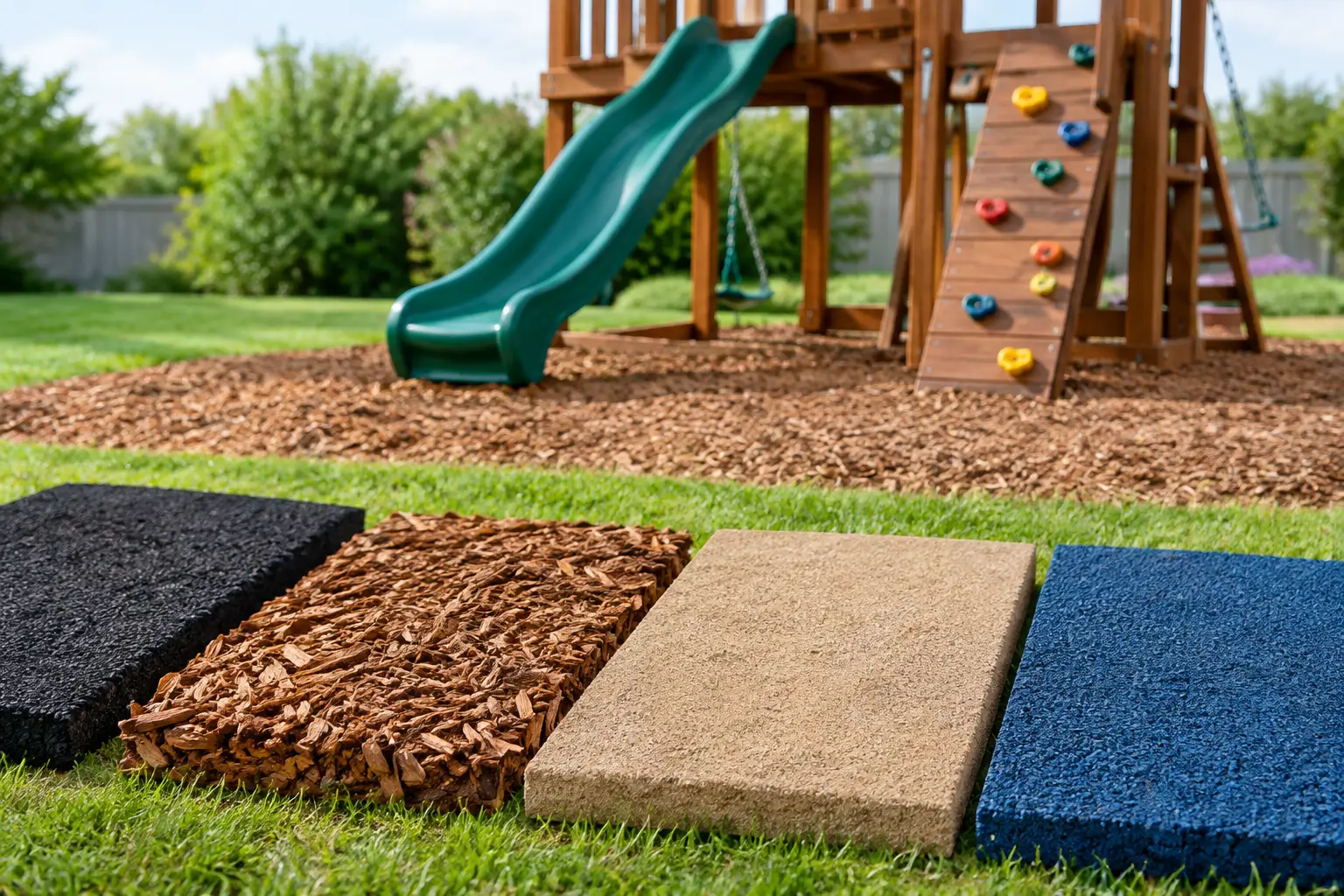
A high deck, fast slide, and big swing arc are exactly what make a backyard playset exciting. They also make the ground below a serious part of the safety plan. So, what surface cushions falls best? For most DFW backyards, a properly installed, well-maintained loose-fill surface such as engineered wood fiber or playground wood mulch offers the best balance of fall protection, drainage, appearance, and budget. But the right answer depends on your playset’s height, the space available, how much maintenance you want, and who will be playing there.
The key word is properly. A soft-looking surface is not automatically a protective one. Material type, installation depth, compaction, drainage, borders, and routine raking all affect how well a play area can help cushion a fall.
What surface cushions falls best? Start with fall height
Before selecting mulch, rubber, or sand, identify the playset’s critical fall height. This is the greatest vertical distance from a designated play surface to the protective surfacing below. For a swing set, that can include an elevated deck, a climbing feature, or other spots where a child could reasonably fall.
The higher the potential fall, the more the surface matters. A ground-level toddler playhouse may need a simpler solution than a Sky Loft playset with elevated platforms, climbing walls, and swings. Safety guidance and product instructions should always shape the final depth and material choice. Do not assume that one depth works for every playset.
For residential use, loose-fill surfacing is commonly installed at a generous depth, often around 9 to 12 inches before it settles. The material compresses over time, gets pushed out from beneath swings and slide exits, and can migrate into the yard. The installed depth must remain sufficient across the entire use zone, not just at the edges where the mulch still looks deep.
The best backyard options, with real trade-offs
Engineered wood fiber
Engineered wood fiber, often called EWF, is a purpose-made playground surfacing material. Its fibers knit together better than ordinary landscape mulch, creating a more stable surface while remaining loose enough to absorb impact. It is widely used at commercial playgrounds for good reason: when installed and maintained to the correct depth, it can provide strong impact attenuation and dependable drainage.
For a premium wooden playset, EWF has a natural appearance that fits beautifully into a landscaped backyard. It stays cooler than many rubber surfaces during a Texas summer and feels more polished underfoot than rough, chunky mulch. It does require occasional raking and replenishment, especially below swings, monkey bars, and slide landings. Still, many families find that maintenance manageable compared with its comfort, drainage, and value.
Playground wood mulch
Playground wood mulch is another excellent choice for many home play areas. It is generally more forgiving than hard-packed soil or grass, blends naturally with wooden playsets, and is easy to top off as needed. The best products are screened for playground use, with a more consistent texture than decorative bark mulch.
The distinction matters. Decorative mulch can contain large pieces, splinters, or irregular chunks that do not perform like tested playground surfacing. If you choose wood mulch, select a product intended for play areas and install it inside a defined border. A proper border keeps material contained, makes depth easier to maintain, and gives the entire play space a clean, finished look.
Rubber mulch
Rubber mulch is a long-lasting option that provides good cushioning when installed at the specified depth. It does not decompose like wood fiber, so it can reduce the need for frequent top-offs. It also comes in different colors, which can be useful for families who want a more customized look.
That durability comes with trade-offs. Rubber mulch costs more up front, can become very hot in direct sun, and may scatter beyond the border. Dallas-Fort Worth summers are a real consideration here. Before choosing rubber, stand in the intended play area at the hottest part of a sunny day and think about bare feet, crawling toddlers, and how much shade the yard receives.
Poured-in-place rubber
Poured-in-place rubber creates a smooth, firm surface commonly seen at parks, schools, and inclusive commercial playgrounds. When it is professionally designed and installed, it can be engineered for specific fall heights and can support mobility devices more easily than loose-fill materials.
For a residential playset, its biggest drawback is cost. It is usually a premium commercial-style investment, and drainage, sub-base preparation, and professional installation are essential. It can also retain heat. This option makes the most sense when accessibility is a primary need or when a homeowner wants a highly finished surface and is prepared for the additional project cost.
Sand and pea gravel
Sand may look like a classic playground solution, but it is not usually the top choice for a high backyard playset. It can compact, shift dramatically, invite unwanted animals, and end up in shoes, grass, and indoor floors. It also requires enough depth to perform as intended, which is often more than families expect.
Pea gravel drains well but is less comfortable for children and is generally not the first recommendation for active residential play zones. It can be difficult under bare feet and is not ideal beneath swings or climbing equipment. For low-use areas or certain older playgrounds, it may still appear, but it is rarely the best fit for a family investing in a premium playset.
Surfaces that do not provide enough protection
Grass, dirt, turf, and concrete are not protective surfacing for an elevated playset. Even thick turf or a lush lawn can become compacted, muddy, uneven, and surprisingly hard after a dry North Texas summer. A grass yard may be fine around the perimeter of the play area, but it should not be treated as the landing surface under a raised deck, swing beam, or climbing structure.
Artificial turf can look appealing, but turf alone is not automatically fall-protective either. Its performance depends on the underlayment and impact-absorbing system beneath it. If turf is part of the plan, make sure the entire system is designed for the playset’s fall height, not simply installed as landscaping.
Depth, borders, and drainage matter as much as the material
A great surfacing material installed too shallowly will not do its job. Loose-fill products need enough depth after settling, and that means planning for maintenance from day one. Check high-traffic areas monthly during active play seasons. Rake material back under swings, ladders, and slide exits, then add more material before bare spots develop.
Borders are more than a visual upgrade. They help retain surfacing, establish the play area’s footprint, and reduce the amount of mulch drifting into flower beds or grass. They should be smooth, securely installed, and positioned so they do not create a trip hazard.
Drainage deserves attention in DFW yards. A play area that holds water can turn mulch into a soggy mess and accelerate wear. Grading the site, choosing a drainage-friendly material, and preparing a stable base create a cleaner, more usable play space after a heavy rain. Avoid placing the playset at the bottom of a slope or where roof runoff drains directly into the use zone.
Plan the full use zone, not just the playset footprint
The protective surface should extend beyond the playset itself. Children do not land neatly beneath a platform. They run out from slides, jump from low elements, and travel forward and backward under swings. The required clear zone varies by equipment type and manufacturer instructions, so measure the entire activity area before ordering materials or building a border.
This is where professional site planning saves headaches. A playset can fit inside a yard and still lack the room needed for a safe surfacing zone. Dallas Playsets can help families think through installation, borders, and ground material as one backyard project rather than a series of last-minute add-ons.
Match the surface to how your family plays
For most families, engineered wood fiber or certified playground wood mulch is the practical winner: it cushions well when maintained at the right depth, drains effectively, stays more comfortable in summer heat, and complements a wooden playset. Rubber mulch can make sense for homeowners who prefer a longer-lasting material and have a shaded or partly shaded area. Poured rubber is best reserved for projects where accessibility and a finished commercial-grade look justify the investment.
Whatever you choose, make surfacing part of the playset purchase, not an afterthought. The right material beneath the action helps children play big with more confidence, and it gives parents one more reason to enjoy every climb, swing, and slide from the patio.