
Blog · September 17, 2026
How to Anchor Wooden Playsets in Your Yard
A premium wooden playset can turn an ordinary backyard into the place your kids want to be after school, on weekends, and all summer long. But before the first swing or trip…
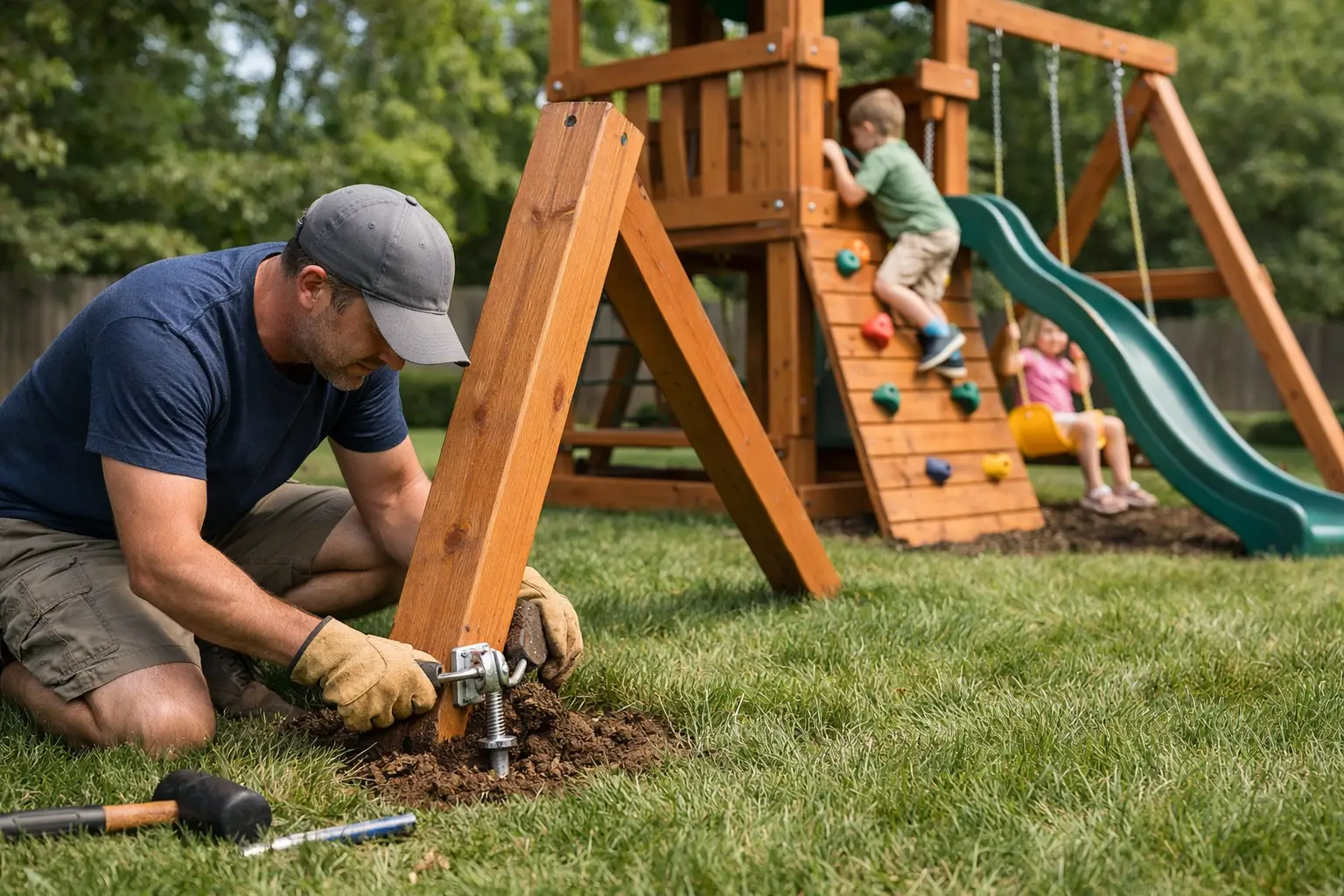
A premium wooden playset can turn an ordinary backyard into the place your kids want to be after school, on weekends, and all summer long. But before the first swing or trip down the slide, learning how to anchor wooden playsets is a key part of creating a safer, more dependable space for active play.
Anchoring helps keep a playset stable as children climb, swing, jump, and invite friends over. It is not just about preventing movement on a windy day. A properly secured structure is better able to handle the real forces of childhood adventure: a big swing arc, kids racing across a bridge, or several little climbers gathering on one platform at once.
Why Wooden Playsets Need Anchoring
Even a heavy wooden playset can shift over time. North Texas yards may have compacted soil, clay-heavy ground, sloped areas, drainage challenges, or soil that expands and contracts through wet and dry seasons. Those conditions can affect how level and secure the structure remains.
Anchors help resist lifting, sliding, and rocking. They also help the playset stay in the position where it was assembled, which matters for safe use of swings, slides, ladders, and climbing features. If a structure moves, hardware can loosen, decks can go out of level, and the clearance around moving swing beams can change.
Not every playset uses the same anchoring system. The correct method depends on the manufacturer’s design, the size and height of the set, the ground surface, local site conditions, and whether the playset is installed on grass, mulch, engineered wood fiber, or another approved playground surface. Treat anchoring as part of the installation plan, not an afterthought.
Start With a Level, Well-Planned Site
Anchors cannot solve a poor installation location. Before anchoring begins, choose a spot with enough open room around the entire playset. Swings, slides, and climbing areas need generous clearance so children do not swing into fences, trees, patios, or other hard obstacles.
The ground should be as level as possible. A slight grade may be workable with proper site preparation, but placing a wooden playset directly across a noticeable slope can create uneven loads on its legs and anchors. It can also make platforms feel off-balance and cause water to collect beneath the structure.
Check drainage before installation. A low area that turns muddy after every rain is not ideal for a playset or its anchors. Standing water can accelerate wear, soften the surrounding soil, and make ground cover less effective. In many Dallas-Fort Worth yards, a prepared area with a defined border and suitable ground material creates a cleaner, more stable foundation for years of play.
Call 811 before driving any ground anchor or digging for concrete. Underground utility lines, irrigation systems, landscape lighting, and drainage pipes can all be hidden below a seemingly open lawn.
Choose the Anchor Method Specified for Your Playset
The manufacturer’s installation instructions should always lead the decision. Premium wooden playsets are engineered with specific leg layouts, brackets, hardware, and anchoring requirements. Substituting a random hardware-store solution may not provide the intended holding strength and could affect warranty coverage.
Ground anchors for suitable soil
Many residential wooden playsets use metal ground anchors that extend into the soil and connect to the playset legs or frame with approved hardware. These may be driven, screwed, or installed using a manufacturer-specified configuration.
Ground anchors are often a practical choice in a level yard with stable soil. Their effectiveness depends on correct depth, proper placement, and secure attachment to the playset. They should sit where they will not create a sharp, exposed tripping hazard. If the play area includes loose-fill surfacing, anchors and connecting hardware should be installed and covered according to the manufacturer’s directions.
Concrete footings when the design calls for them
Some larger structures, certain commercial applications, or challenging site conditions may call for concrete anchoring. Concrete can provide substantial stability, but it is not automatically the best answer for every backyard playset.
Concrete work must be planned carefully. Footings need to be positioned accurately, set at the proper depth, and finished so that no hard edge or exposed surface sits within the fall zone. A misplaced footing can make future leveling, relocation, or repairs more complicated. It can also create a hard surface beneath an area where children may fall.
Surface and border considerations
A playset should not be anchored through a patio, pavers, or thin concrete slab unless the manufacturer specifically approves that installation method. These surfaces can crack, shift, or fail to provide the required anchor performance.
Likewise, a landscape border is not an anchor point. Borders help contain ground material and define the play area, but the playset’s stability must come from its approved anchoring system and properly prepared site.
How to Anchor Wooden Playsets Step by Step
Once the site is ready and the playset is fully assembled, the anchoring process should follow the instructions for that exact model. In general, the work follows a careful sequence.
First, confirm that the playset is level in both directions. Check the main deck, swing beam supports, and leg placement before securing anything permanently. If the structure is already leaning or rocking, correct that issue first. Anchoring a crooked playset simply locks the problem in place.
Next, position each anchor exactly where the instructions indicate. The anchor should align with the relevant leg, bracket, or frame connection without pulling the structure out of square. Do not force a leg inward or outward to make an anchor fit.
Install the anchors to the required depth and orientation for the system. Use the approved brackets, bolts, washers, and fasteners. Tighten connections securely, but avoid overtightening wood fasteners to the point that they crush the lumber or strip the hardware.
After every anchor is connected, test the playset for unwanted movement. A small amount of normal flex can occur in a large wooden structure, especially around swings and climbing components. Sliding across the ground, significant rocking, lifting at a leg, or a deck that no longer appears level are signs that something needs attention.
Finally, cover and finish the play area as designed. If you are using mulch, engineered wood fiber, or another loose-fill surface, maintain the recommended depth and keep hard anchor components appropriately concealed. The goal is a play zone that feels fun under little feet while helping soften falls.
Common Anchoring Mistakes to Avoid
The most common mistake is installing a playset on unprepared ground and assuming its weight is enough. Weight helps, but it does not replace proper anchors, especially on a swing set that sees regular high-energy use.
Another problem is using anchors that are too shallow or installed in soil that has been recently disturbed and never compacted. Freshly filled soil can settle, leaving legs uneven and anchors less secure. If you have recently completed drainage work, landscaping, or construction in the yard, have the site evaluated before installation.
Avoid skipping the final level check. A playset can look level from across the yard while still being slightly off at the deck or swing beam. Those small differences matter more as children use the structure over time.
Also, do not bury exposed anchor hardware without first confirming that all bolts are properly tightened and accessible for future inspection. Anchors are not a one-and-done task. They need to be part of routine playset care.
Keep Anchors Secure Through Every Season
Inspect your playset at the beginning of each play season and after severe weather. Look closely at anchor connections, leg bases, bolts, brackets, and the ground around each support. If soil has washed away, mulch has compacted, or a leg has begun to settle, address it before the kids return to full-speed play.
Watch for loose hardware, cracked wood around attachment points, rust on metal components, or anchor movement. A tune-up can catch small issues before they become bigger repairs. This is especially useful after a playset has been moved, after major landscaping changes, or when the backyard experiences extended heavy rain or drought.
For busy families, professional installation takes the guesswork out of site preparation, leveling, anchoring, and safety checks. Dallas Playset Company can help create a smooth, stress-free path from delivery to the first big backyard adventure.
A well-anchored wooden playset lets kids focus on the good part: climbing higher, swinging farther, and making the backyard their favorite place to play.