
Blog · October 30, 2026
Best Church Playground Designs for Active Kids
A church playground is often where a first-time family decides whether your campus feels like home. While parents talk after service or wait for pickup, children need a place…
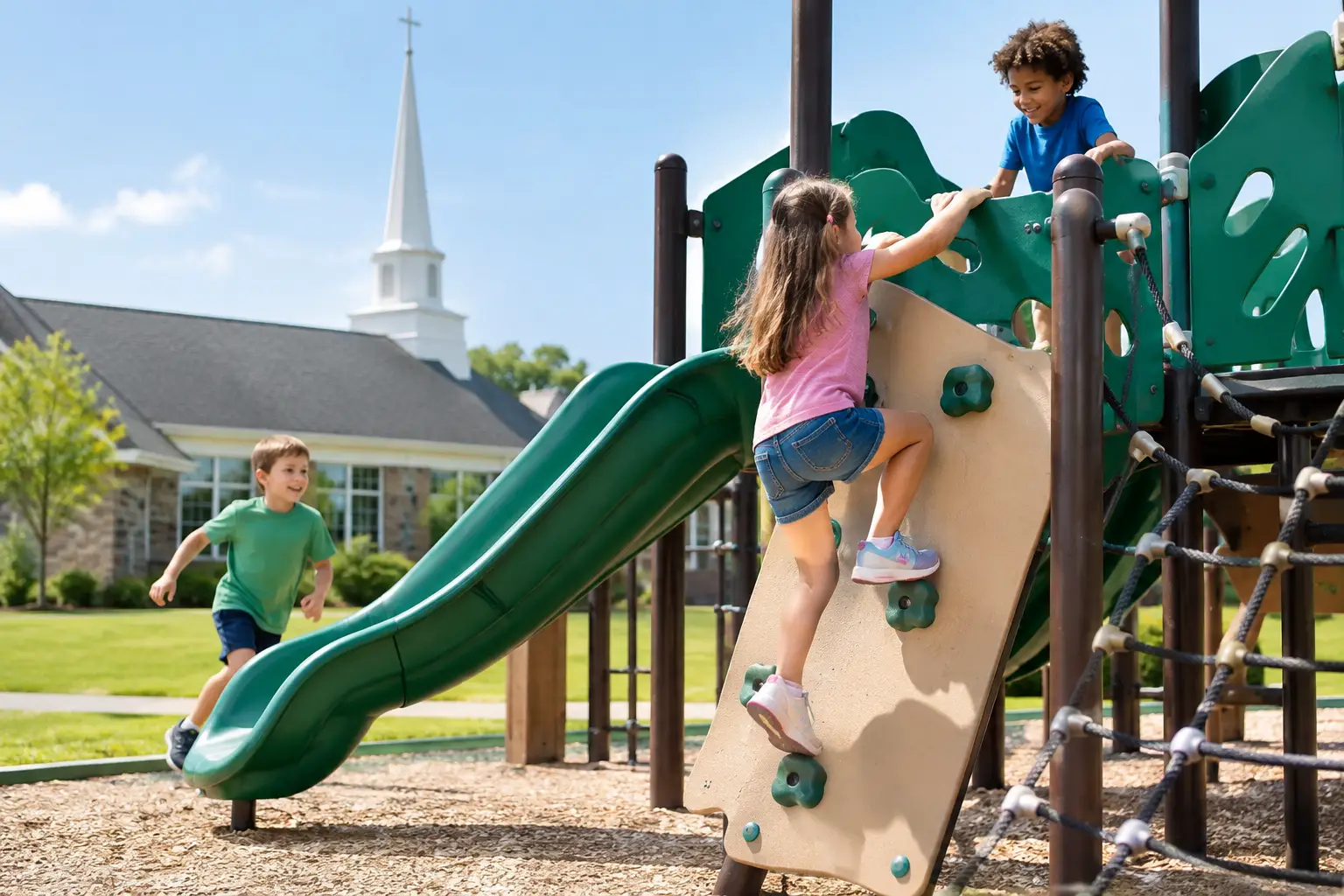
A church playground is often where a first-time family decides whether your campus feels like home. While parents talk after service or wait for pickup, children need a place that feels inviting, active, and well cared for. The best church playground designs do more than fill open space with equipment. They support children’s ministry, give families a reason to stay connected, and create room for kids to play big together.
For DFW churches, that means balancing joyful activity with Texas heat, changing age groups, busy Sunday traffic, and long-term upkeep. A great design starts with how your congregation will actually use the space.
Start With the Ministry, Not the Equipment
Before choosing a slide, swing beam, or climbing feature, look at the playground’s role in your church. Is it primarily for preschool classrooms during the week? A gathering spot after Sunday service? A shared outdoor space for a childcare program, weekday school, or community events? Those answers shape the right size, layout, and equipment mix.
A small church with young families may benefit most from a compact, highly visible play area near the children’s wing. A larger campus may need separate zones so toddlers are not competing with older elementary-age kids for the same climbing structure. The goal is not to install the biggest playground possible. It is to create an outdoor play environment that works reliably for the children and caregivers already on your campus, with enough flexibility for the growth you expect.
Keep sightlines front and center. Teachers, volunteers, and parents should be able to supervise active play without weaving around blind corners or standing beneath elevated decks. Positioning equipment thoughtfully can make check-in, pickup, and post-service play feel calmer for everyone.
Best Church Playground Designs Use Age-Based Zones
A single structure for every child sounds efficient, but it can create frustration and safety concerns. Toddlers need low platforms, short slides, easy-access stairs, and ground-level activities. School-age children are ready for bigger climbing walls, monkey bars, taller decks, swings, and imaginative features that keep them moving.
When space allows, design distinct areas for different developmental stages. A toddler zone near the building can offer more supervision and a quieter play experience. An adjacent school-age zone can bring the adventure with elevated play decks, climbing challenges, tube slides, and swing options. Separating these areas does not have to mean building a hard barrier between them. Changes in surfacing, borders, paths, or equipment placement can clearly signal where each age group belongs.
For churches serving a broad range of families, consider these four activity types across the overall design:
- Active climbing and sliding for big-body movement
- Swinging and spinning for classic playground energy
- Ground-level panels or playhouses for imaginative, social play
- Benches or shaded seating for parents, volunteers, and caregivers
This mix matters because not every child wants to race to the tallest platform. A welcoming playground gives climbers, observers, imaginative players, and new friends a way to participate.
Choose a Layout That Makes Supervision Easier
The most attractive equipment cannot overcome a difficult layout. A playground should have clear entry and exit points, straightforward walking paths, and enough open room around equipment for safe use. Avoid squeezing a large structure into a narrow area simply because it fits on paper. Children need circulation space, and supervisors need room to move quickly when needed.
A central multi-activity structure often works well for churches because it creates a natural hub for climbing, sliding, and imaginative play. Swings can sit to one side with their own clear use area, rather than crossing the path to a slide or climbing feature. Quiet activities and seating belong at the perimeter, where adults can still watch the action without standing in the middle of it.
The entrance deserves attention, too. A secure, easy-to-latch gate helps keep young children within the play area and gives staff a simple point of control during weekday programming. For churches that host outside groups, thoughtful access planning can also help protect the playground when it is not in use.
Build for North Texas Heat and Real-World Weather
In Dallas-Fort Worth, shade is not an optional finishing touch. Summer sun can make play equipment and surfacing uncomfortably hot, shorten play sessions, and send families indoors sooner than planned. Natural shade is valuable, but mature trees should be evaluated carefully so roots, falling limbs, and seasonal debris do not create problems around the play area.
Shade structures, strategically placed canopies, and covered seating can make outdoor time more practical through much of the year. The right approach depends on your site, budget, tree coverage, and equipment layout. It is also worth considering the sun’s path at the times your playground gets the most use. A shaded bench at 8 a.m. may offer little relief after Sunday service at noon.
Drainage is another big factor. Texas rain can turn a low area into a muddy, unusable mess quickly. Proper site grading and ground preparation help water move away from the play space, protect surfacing, and reduce ongoing maintenance headaches. This is one reason a full-service approach is so valuable: the installation is only as good as the site beneath it.
Surfacing Is Part of the Playground Design
Ground material may not be the exciting part of a playground project, but it is one of the most important decisions your church will make. The surface needs to support the equipment’s required fall zones, drain well, stay contained, and stand up to regular use by many children.
Engineered wood fiber, rubber mulch, poured-in-place surfaces, and rubber tiles each come with trade-offs. Loose-fill materials can be a practical choice for larger areas and are easier to replenish, but they need periodic raking and top-offs. Unitized rubber options create a clean, accessible appearance and can reduce loose material migration, though the upfront investment may be higher. Your selection should reflect the equipment, expected traffic, accessibility goals, budget, and maintenance capacity.
Borders are equally practical. A well-planned border helps define the play area, contain loose-fill surfacing, and keep landscaping from creeping into the space. It also gives the playground a finished look that tells families this area was designed with care.
Select Durable Equipment That Can Handle Group Play
Church playgrounds experience a different kind of wear than a typical backyard. A single Sunday can bring dozens of children through the same ladder, slide, and swing seats. Weekday preschools and child care programs can add even more traffic. Equipment needs to be selected for the use level you expect, not only for how it looks on opening day.
Durable construction, quality hardware, weather-resistant materials, and replaceable components all matter. Multi-activity designs are often a strong fit because they spread children across several play events rather than creating one crowded focal point. A larger structure may cost more at the start, but the right capacity can prevent premature wear and reduce the need to expand immediately.
Churches should also plan for inspection and maintenance from day one. Fasteners can loosen, surfacing can shift, and high-touch areas deserve regular attention. A maintenance schedule protects the investment and helps staff catch small issues before they interrupt programming. Dallas Playsets can support commercial playground projects with equipment guidance, professional installation, ground preparation, and continued service for local organizations that want a smooth, stress-free ownership experience.
Make Space for Connection, Not Just Play
The strongest church playgrounds give adults a reason to linger while children play. A few well-placed benches, shaded seats, or picnic tables can turn a quick pickup into a conversation between parents. That connection is not an extra feature. For many families, it is where relationships start.
Consider placing seating where caregivers can see the main play areas, but avoid putting every bench in direct sun. If your church hosts seasonal events, leave a flexible open area nearby for bubbles, crafts, family picnics, or children’s ministry activities. Small choices like these make the playground feel like part of your campus ministry rather than a separate amenity.
Before moving forward, have your team walk the proposed area at the same time of day families will use it. Notice the sun, parking-lot noise, drainage, entry routes, visibility, and available space for caregivers. The right playground is the one that invites children into active, confident play while helping every parent feel that their family is welcome to stay a little longer.