
Blog · October 8, 2026
Playground Drainage Solutions for DFW Yards
A backyard playset should be ready when the kids are - not closed because the area beneath the swings is muddy, slippery, or holding water. In Dallas-Fort Worth, sudden heavy…
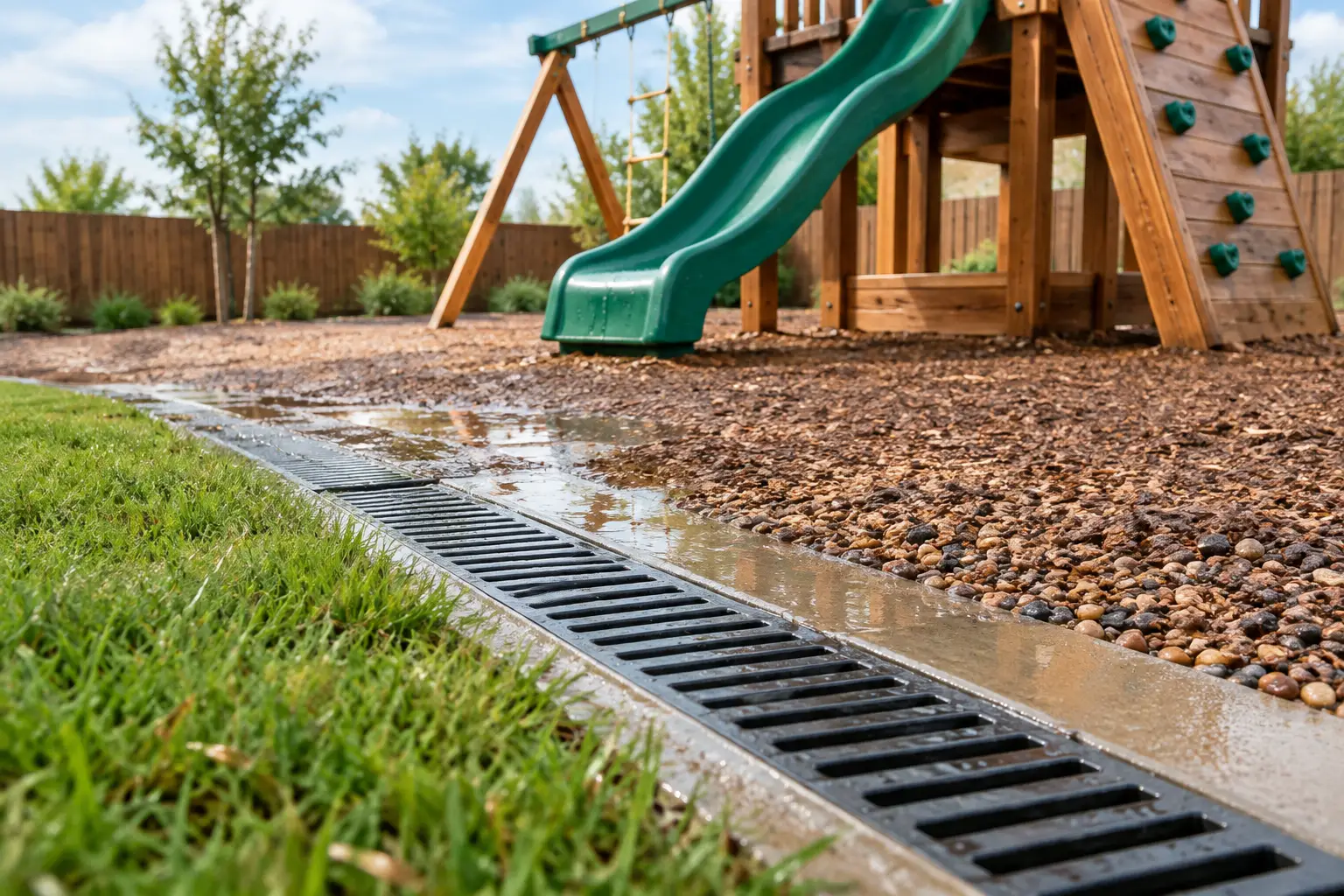
A backyard playset should be ready when the kids are - not closed because the area beneath the swings is muddy, slippery, or holding water. In Dallas-Fort Worth, sudden heavy rain, compacted clay soil, and flat yards can turn a favorite play zone into a mess quickly. The right playground drainage solutions protect the ground under your equipment, help preserve your investment, and make outdoor play easier to enjoy between storms.
For families choosing a premium wooden playset, drainage is not an afterthought. It is part of creating a safe, comfortable backyard adventure that lasts. The goal is not necessarily to make every inch of the yard dry after a downpour. It is to move water away from the play area, reduce erosion, and build a surface that works with the way your family plays.
Why Water Collects Around Playsets in DFW
North Texas soil often contains a high percentage of clay. Clay can be tough, dense, and slow to absorb water, especially after a long dry spell. When rain arrives hard and fast, water may sheet across the yard or settle in the lowest available spot. Unfortunately, that low spot is sometimes right where a playset has been installed.
The playset itself can add to the issue. Foot traffic compacts the ground around ladders, climbing walls, slide exits, and swing lanes. Those are also the places where rainwater has the hardest time soaking in. A roof, canopy, or elevated clubhouse can concentrate runoff along its edges, while a nearby patio, fence line, or neighboring slope may direct even more water toward the play area.
Standing water creates more than muddy shoes. It can wash loose-fill surfacing out of place, leave slick patches on hard-packed soil, expose roots, and form ruts where children land and run. Over time, water that repeatedly sits near wooden posts may also make routine maintenance more important. Good drainage helps the entire site perform better.
Start With the Play Area's Natural Grade
Before choosing drains, gravel, or ground cover, look at how water already moves through the yard. After the next substantial rain, check where puddles form, which direction runoff travels, and whether water enters the play zone from a roof downspout, lawn slope, or adjoining hardscape. This simple observation can prevent a costly fix that treats the symptom instead of the source.
A properly prepared play area generally needs a gentle slope that encourages water to move away from the equipment and toward a suitable drainage path. The grade should be subtle enough that children still have a level, comfortable area for climbing and swinging. An overly steep surface may solve one water problem while creating an awkward or unsafe play space.
This is where professional site preparation earns its value. The right approach depends on the yard, the playset footprint, existing utilities, fences, trees, and local drainage patterns. In some yards, minor grading is enough. In others, the play area needs a more complete base and a dedicated route for water.
Keep runoff away from the playset footprint
Water should not be redirected toward a neighbor's property, foundation, or low point that already struggles after rain. A drainage plan needs an appropriate outlet, whether that is a lower portion of the yard, an approved drainage area, or a system designed for the property. When grading or drainage changes are significant, consult a qualified local professional who understands the site and applicable requirements.
Choose a Surface That Lets Water Move
The material beneath and around a playset affects drainage, comfort, maintenance, and fall protection. There is no single best option for every DFW backyard. The right choice depends on how the area will be used, the equipment height, your preferred look, and how much ongoing upkeep you want.
Loose-fill materials such as engineered wood fiber, mulch, or playground wood chips are popular because they create a softer play surface and can allow water to filter downward when installed over a properly prepared base. They need periodic raking and replenishment, particularly below swings and at slide exits where kids naturally move material aside. A border helps keep the material contained and gives the play area a finished, intentional look.
Pea gravel and similar stone products drain well, but they are not a universal answer for play zones. They can shift underfoot, migrate into the lawn, and may not provide the fall protection needed for certain equipment or installation requirements. Decorative landscape rock is usually a poor substitute for a purpose-built playground surface.
Synthetic turf can create a polished look and reduce mud, but it must be installed over a well-draining base. Turf laid directly over compacted clay may still hold water beneath the surface. It also becomes warmer in the Texas sun, so shade, use patterns, and material selection deserve careful consideration.
Natural grass looks inviting, but it often wears out fastest in the high-traffic areas around swings, ladders, and slides. If grass is the preferred surface, expect muddy spots during wet weather and plan for aeration, reseeding or sod repair, and occasional rest periods for the lawn.
Playground Drainage Solutions That Address the Real Problem
A successful system often combines more than one approach. Grading and an appropriate surface may be all a gently sloped yard needs. For persistent water, additional drainage features can direct runoff away before it damages the play area.
A French drain is one common option for yards where water gathers along one edge of the play zone or flows downhill into it. Typically, it uses a gravel-filled trench and perforated pipe to collect subsurface water and carry it to an approved outlet. It can be effective, but it must be designed with the right slope and discharge location. A drain with nowhere useful to send water will not solve much.
A dry creek bed can guide surface runoff across the yard while adding a natural landscape feature. It works best when it follows the yard's existing drainage path rather than fighting it. In family play spaces, the stone size, edge treatment, and location matter. A decorative feature should not become a tripping zone in the middle of a running path.
Catch basins and channel drains can help where runoff comes from a patio, driveway, or other hard surface. They are more targeted tools, often used to intercept water before it reaches the playset area. They also require cleaning. Leaves, mulch, and lawn debris can clog grates and reduce performance when the next storm arrives.
For a small, isolated low spot, regrading and rebuilding the base may be more practical than installing a larger drain system. The best answer is the one that matches the water source, not the one that sounds most elaborate.
Build Borders and Bases for Long-Term Performance
A playground border does more than frame the play area. It holds loose-fill material in place, separates the surface from surrounding grass, and helps maintain the depth needed in active zones. When paired with proper base preparation, it can also make seasonal maintenance much easier.
The base beneath loose-fill surfacing should be stable and designed to manage drainage without mixing soil into the top layer. Landscape fabric is sometimes used to separate materials, but product choice and installation details matter. Some fabrics can clog over time or interfere with water movement if used incorrectly. A professional installer can recommend a system that fits the selected surface rather than using the same layers for every yard.
Borders need thoughtful placement as well. A border that acts like a dam can trap water inside the play area. Depending on the design, drainage openings, a gravel perimeter, or a graded exit path may be needed so water does not collect against the edge.
Maintain the Area After Heavy Rain
Once the play area is built, a few simple checks keep small drainage problems from becoming bigger repairs. After major storms, walk the perimeter and look for washouts, exposed soil, displaced surfacing, or standing water that remains longer than expected. Rake loose-fill material back into swing and slide landing zones, and remove leaves from catch basins or drain grates.
Also check for soil erosion around posts, borders, and nearby slopes. If the ground has changed noticeably, do not keep adding mulch to hide the problem. The underlying water path may need attention. For wooden playsets, routine tune-ups can include checking the site condition alongside hardware, accessories, and the overall structure.
Plan Drainage Before Installation When Possible
The easiest time to address drainage is before the playset arrives. Site preparation can be coordinated with the equipment footprint, safety clearances, borders, and chosen ground material from the beginning. That avoids moving a finished play area later to correct a preventable puddling issue.
Dallas Playsets helps local families think through the full backyard setup, from premium playset selection and professional installation to borders and ground preparation. For larger or more complex drainage concerns, bringing the right site professional into the plan early can save time and protect the finished space.
A great backyard play area does not need to fear every Texas thunderstorm. With a smart grade, an appropriate surface, and drainage that respects how water moves through the property, kids can get back to swinging, climbing, and playing big sooner after the rain stops.