
Blog · November 21, 2026
How Much Playground Space Is Needed for a Swing Set?
A premium playset can turn an ordinary DFW backyard into the place where your kids want to spend every afternoon. But before choosing the tallest tower, fastest slide, or…
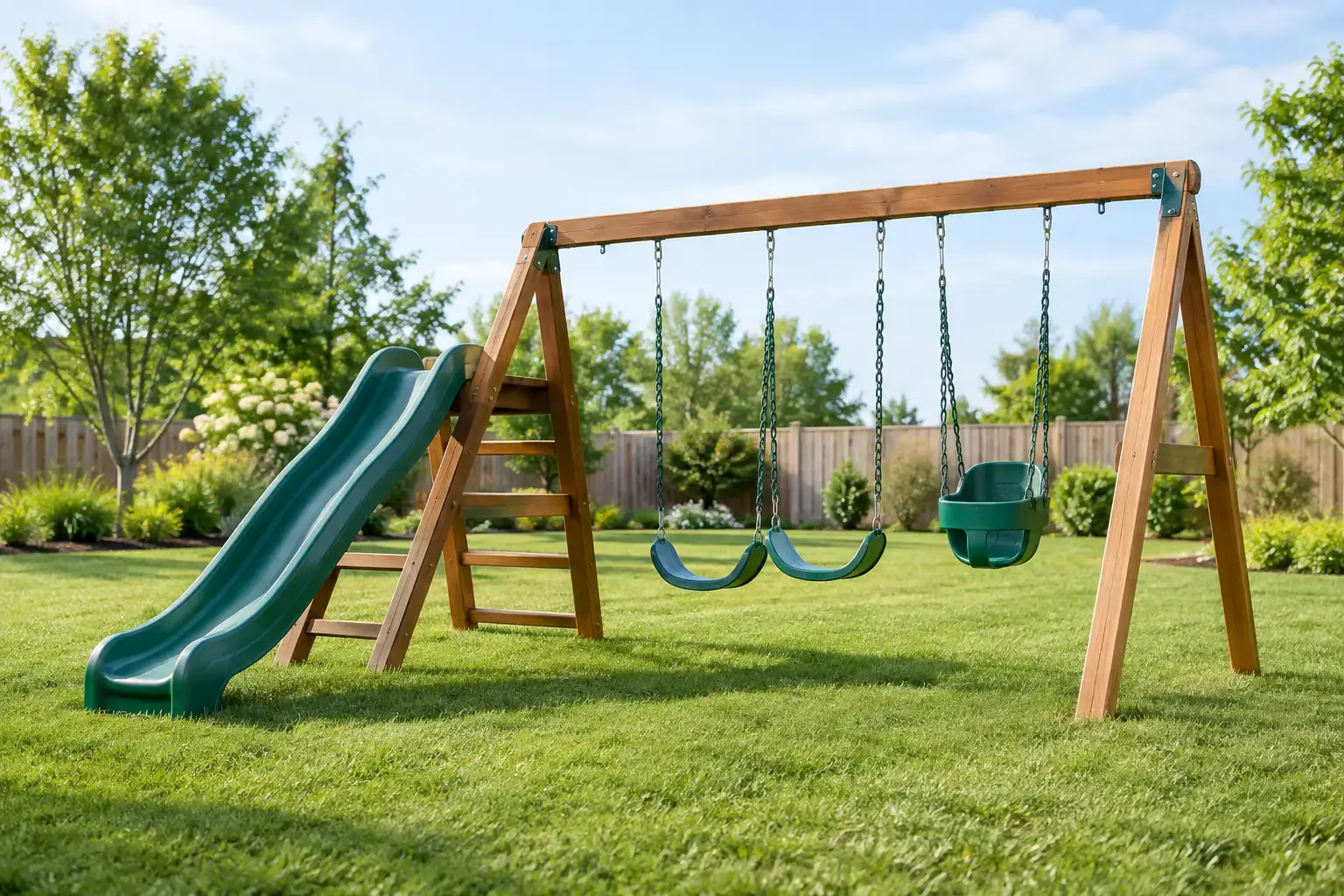
A premium playset can turn an ordinary DFW backyard into the place where your kids want to spend every afternoon. But before choosing the tallest tower, fastest slide, or favorite tube-slide setup, ask the practical question: how much playground space is needed for the equipment and the way your family will use it?
The answer is bigger than the playset's listed footprint. You need room for children to swing, climb, slide, run around the structure, and land on a properly prepared play surface. You also need access for professional installation, future maintenance, and the everyday realities of your yard, from patios and pools to trees, fences, and drainage.
Start With the Playset Footprint
The footprint is the ground area directly occupied by the playset's posts, ladder, slide, climbing wall, swings, and accessories. It is the first measurement to check, but it should never be your final number.
A compact wooden swing set may fit within a space around 12 by 15 feet. Larger Gorilla Playsets with elevated decks, multiple swings, monkey bars, clubhouses, and long slides can require a footprint of 20 by 25 feet or more. Sky Loft-style playsets and configurations with tube slides often need additional room because of their height, slide exit, and support layout.
Measure your yard at its narrowest usable point, not simply from property line to property line. A side yard may look open until you account for a gate, air-conditioning equipment, mature landscaping, a sprinkler head, or the slope near the fence. Marking the approximate footprint with stakes, string, or a garden hose gives you a much more realistic picture than standing in the yard and estimating.
How Much Playground Space Is Needed for Safe Play?
The space around a playset matters as much as the structure itself. This open area is often called a use zone or fall zone. It provides separation from hard surfaces and obstacles while children are moving at full speed.
As a general planning rule, allow at least 6 feet of clear space around the stationary sides of a residential playset. That means keeping the area free of fences, trees, patio edges, retaining walls, grills, garden beds, and other hard or protruding objects. The exact clearance can vary by model, so the manufacturer’s installation instructions should always guide the final layout.
Swings require more room than most families expect. A child does not travel straight down under the swing beam. They move forward and backward through a wide arc, and friends may walk behind the swing path without looking. Plan a generous open zone in front of and behind the swing beam. For many swing sets, manufacturer guidance bases this clearance on the height of the swing pivot point, often extending well beyond a standard 6-foot perimeter.
Slides need a clear exit area, too. Leave room at the bottom so children can sit, stand, and move out of the way before the next child comes down. A tube slide may take up more side-to-side room than a straight slide, while a long wave slide can extend farther into the yard than expected.
If your children are likely to add a trapeze bar, toddler bucket swing, glider, climbing rope, or other accessory over time, plan for that now. A layout that barely works on installation day can become cramped as your family’s play needs grow.
Account for Ground Cover and Borders
A safe play area is not just open grass. The surface under and around the playset should help cushion falls and stay practical through North Texas weather.
Many homeowners choose engineered wood fiber, rubber mulch, or another impact-absorbing ground material contained within a border. The border should extend through the entire use zone, not only under the playset frame. If your swing set needs a 6-foot clearance on each side, your ground cover area needs to include that full clearance as well.
For example, a playset with a 15-by-20-foot footprint may need a bordered play area closer to 27 by 32 feet once you add 6 feet around the sides. The swing zone may push the required length even farther. That is why comparing only the product footprint can lead to a costly surprise after you have selected a set.
Grass can work for some low-use backyard setups, but it tends to wear down quickly beneath swings, ladders, and slide exits. Bare soil becomes muddy after rain and hard in dry weather. A dedicated ground-preparation plan can create a cleaner, more comfortable play space and make the whole backyard look finished rather than improvised.
Choose the Best Spot in Your Backyard
The ideal location balances safety, supervision, drainage, and everyday family life. A playset tucked into the farthest corner of a large yard may technically fit, but it may not be where children play most often or where parents can easily keep an eye on them.
Look for level ground with good drainage and clear sightlines from the house, patio, or outdoor seating area. In Dallas-Fort Worth, this is especially helpful during hot afternoons, sudden rain, and the active outdoor months when kids move between the playset, pool, snack table, and house.
Avoid placing a playset directly beneath low branches, near overhead utility lines, beside a pool, or too close to a driveway. Be cautious around slopes. A slightly uneven yard can sometimes be prepared properly, but a steep grade may require more extensive site work and can affect where a slide, ladder, and swing beam can safely sit.
Sun exposure is another trade-off. Full sun keeps damp areas from lingering, but metal components and dark slide surfaces can get hot during Texas summers. Partial shade can make the space more comfortable, provided branches are safely clear and the site still dries well. There is rarely a perfect spot, so prioritize the non-negotiables first: clearances, stable ground, drainage, and visibility.
Leave Room for Installation and Ownership
Professional installation makes a premium wooden playset feel smooth and stress-free from the start, but installers need working room. They need a clear route from the delivery point to the build site and enough space around the structure to assemble components safely.
Before delivery day, consider gate widths, side-yard access, landscaping, low-hanging limbs, and any obstacles between the street and your backyard. A beautiful play area behind a narrow gate may still be possible, but it is worth identifying access challenges before the equipment arrives.
Also leave room for future ownership needs. Wood playsets benefit from periodic tune-ups, hardware checks, and routine care. You may eventually want to move the set, refresh the ground material, add accessories, or adjust the layout as your children grow. A little breathing room around the play area makes all of that easier.
A Simple Backyard Planning Method
Start by measuring the proposed playset footprint from the product specifications. Next, add the manufacturer-required use zones, with special attention to the swing path and slide exit. Then add your border and ground-cover area around that full safety zone.
Once you have those dimensions, lay them out in the yard using marking paint, string, or a hose. Walk through the space as if the playset were already there. Can you still open the gate? Is there a comfortable path to the patio? Will a child on the swing come too close to a fence? Is there enough room for adults to supervise, mow, and maintain the area?
This simple step often makes the decision clear. You may find that the larger playset you love fits beautifully, or that a slightly more compact configuration leaves more room for a trampoline, garden, dog run, or the open lawn your family enjoys.
Get a Site Plan Before You Buy
Every backyard and every playset configuration is different. A set that works well in a wide suburban yard may need a different orientation in a smaller lot with a pool, covered patio, or mature trees. The safest plan is based on the specific model, its manufacturer instructions, and an honest look at your site.
Dallas Playsets can help families think through the full picture, from selecting quality Gorilla Playsets to local delivery, expert installation, borders, and ground materials. Bring your yard measurements, a few photos, and any questions about access or drainage. A well-planned play area gives your children room to play big and gives you confidence that the backyard adventure has a solid place to grow.