
Blog · September 17, 2026
Playground Design That Makes Backyards Work
A great backyard does not need a massive footprint to become the place your kids want to be after school. It needs thoughtful playground design : enough room to move, equipment…
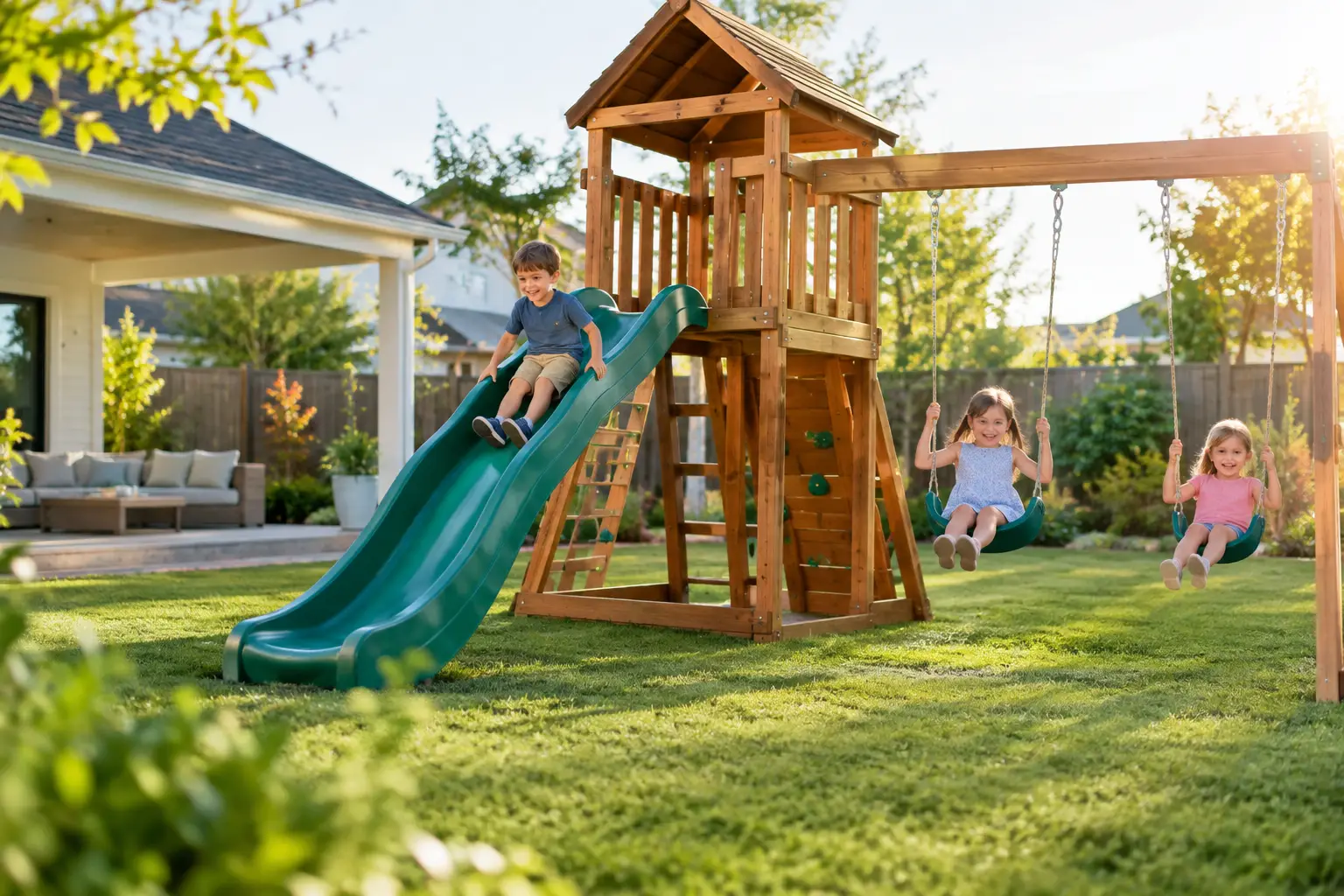
A great backyard does not need a massive footprint to become the place your kids want to be after school. It needs thoughtful playground design: enough room to move, equipment that matches how your children play, and a site prepared for safe, lasting fun. When those pieces come together, a swing set becomes more than a backyard feature. It becomes the launch point for climbing contests, make-believe missions, neighborhood playdates, and the kind of active childhood families remember.
For Dallas-Fort Worth homeowners, the best plan also has to account for Texas heat, changing soil conditions, mature trees, sprinklers, and the reality that busy parents do not have a weekend to spend sorting through freight boxes and hardware. Here is how to design a backyard play space that feels exciting on day one and works hard for years.
Start Playground Design With the Yard, Not the Catalog
It is tempting to choose a playset based on the biggest slide or most impressive tower first. Those features matter, but the yard should guide the decision. Start by identifying a level, visible area where adults can keep an eye on play from the house, patio, or outdoor seating area. A play area tucked behind a garage or far corner may look open, but it can make supervision harder.
Measure more than the footprint of the playset. Kids need a use zone around every swing, slide, climbing wall, and ladder. Swings require generous open space in front and behind their travel path, while slides need a clear runout at the bottom. Planning only for the structure itself is one of the most common ways a backyard installation becomes cramped.
Look overhead as well. Low branches, power lines, roof edges, and hanging light fixtures can limit where a taller tower or Sky Loft model belongs. Below ground, take note of irrigation heads, drainage routes, utility lines, and roots. A professional site review helps catch these details before installation day, when moving a planned location is much easier than correcting a finished project.
Make Room for How Your Family Uses the Backyard
The best location depends on your priorities. If the patio is your main gathering space, you may prefer the playset close enough for easy supervision but far enough away that swinging and running do not interrupt outdoor meals. If you have a pool, create clear separation between active play and the pool area. A fence, landscaping plan, or simply intentional spacing can help define each zone.
Leave some open lawn when possible. A packed backyard may offer plenty to look at, but children also need room for tag, balls, chalk games, and simple unstructured play. The goal is not to fill every square foot. It is to give the yard a natural rhythm between active equipment, quiet corners, and open space.
Choose Features for the Kids You Have and the Years Ahead
A premium wooden playset is an investment, so choose with both current ages and future use in mind. Toddlers often enjoy lower decks, easy-access steps, small slides, and bucket-style swings. School-age children usually stay interested longer when a structure adds meaningful climbing challenges, a taller deck, a clubhouse feel, monkey bars, or a fast tube slide.
For families with a wide age range, multi-activity playsets are often the smart choice. Younger children can swing or play beneath the fort while older siblings climb, slide, and create games overhead. A larger structure can also make a backyard more welcoming for cousins and neighborhood friends, which matters when your home becomes the regular after-school meeting spot.
That said, bigger is not automatically better. An oversized playset can overwhelm a smaller yard, create a difficult layout, and leave little room for the rest of family life outdoors. A well-proportioned design with the right mix of features will get more use than a towering structure squeezed into a corner.
Think about play styles, not just individual components. The child who loves to climb may value a rock wall and cargo net more than a second slide. Kids who turn every outing into a pretend game may get years of use from a covered fort, steering wheel, telescope, and picnic table. For high-energy households, a swing beam with multiple swing positions keeps more children moving at once.
Build Safety Into the Plan From the Ground Up
Good playground design makes safety part of the layout rather than an add-on after the equipment arrives. Start with a stable, properly prepared site. Ground that slopes, shifts, or collects water can affect both the look and long-term performance of a play area. Dallas-Fort Worth soils can be especially challenging, making site assessment and professional preparation worthwhile.
Protective surfacing is equally important. Grass may look inviting, but it does not provide the same impact protection as properly selected and maintained playground ground materials. Depending on the site and equipment, options may include engineered wood fiber, rubber mulch, or other materials suited to an active play zone. The right depth and coverage matter as much as the material itself.
Borders give loose-fill surfacing a defined home. They help contain material, create a clean finished edge, and make the play area feel purpose-built instead of temporary. In some yards, borders can also help accommodate gentle grade changes or separate the play zone from landscaping.
Avoid placing equipment directly on concrete, pavers, or other hard surfaces. Keep the use zone clear of patio furniture, grills, planters, toys, and decorative landscape features. It may seem obvious, but backyards change over time. A quick seasonal check keeps new obstacles from drifting into the area where kids land, swing, and run.
Installation Is Part of the Safety Plan
A quality playset deserves quality assembly. Proper installation involves more than connecting pieces. It means leveling the structure, anchoring it appropriately, checking hardware, aligning moving components, and confirming that the completed setup matches the intended use area.
Professional installation also saves families from the most frustrating part of a major backyard purchase: managing freight delivery, sorting hundreds of parts, and trying to build a large structure in unpredictable Texas weather. Dallas Playset Company can coordinate delivery, expert installation, borders, and ground materials so the project moves from selection to backyard adventure with far less guesswork.
Plan for Shade, Heat, and Everyday Comfort
Summer play in North Texas calls for a practical approach to heat. Shade from mature trees can be valuable, provided branches and roots do not interfere with safe placement. A shaded patio nearby gives adults a comfortable viewing area, and a covered fort can offer children a brief break from direct sun during imaginative play.
Do not assume a shaded yard stays cool all day. Watch how sunlight moves across the space before finalizing placement. A location that feels ideal in the morning may receive intense late-afternoon sun, right when children come outside. You may decide that orientation, shade sails positioned outside the use zone, or a nearby water station makes the space more comfortable.
Comfort supports longer play sessions. A bench or patio chair placed with a clear view of the equipment encourages adults to stay nearby. Storage for balls, chalk, helmets, and outdoor toys prevents clutter from creeping into the use zone. These small choices make it easier to say yes when kids ask to go outside.
Design for Ownership, Not Just Installation Day
A backyard playset should fit your family now, but it should also be manageable over time. Wooden equipment benefits from periodic inspections, hardware checks, cleaning, and attention to surfacing levels. Weather, active play, and normal settling can all create maintenance needs, even with premium materials.
Create a simple seasonal habit. Before the busiest play months, inspect swings, chains, connectors, slides, handholds, and exposed wood. Check that fasteners remain secure and that protective surfacing has not compacted or thinned in high-traffic landing areas. After major storms, look for drainage problems, loose branches, or shifted material around the structure.
If your family moves within the metroplex or the backyard layout changes, professional swing-set moving services can protect the investment and help ensure the equipment is rebuilt correctly at its new home. That kind of ongoing support is worth considering before purchase, especially for a premium playset designed to stay in the family for years.
A backyard play space is at its best when it invites children out without requiring a big production. Give them a safe place to climb higher, swing longer, invent louder games, and come inside tired in the best possible way.