Blog · October 22, 2026
What Makes Playground Equipment Commercial Grade?
A playground can look impressive on day one and still be the wrong fit for a school, church, childcare center, or HOA. What makes playground equipment commercial is not simply…
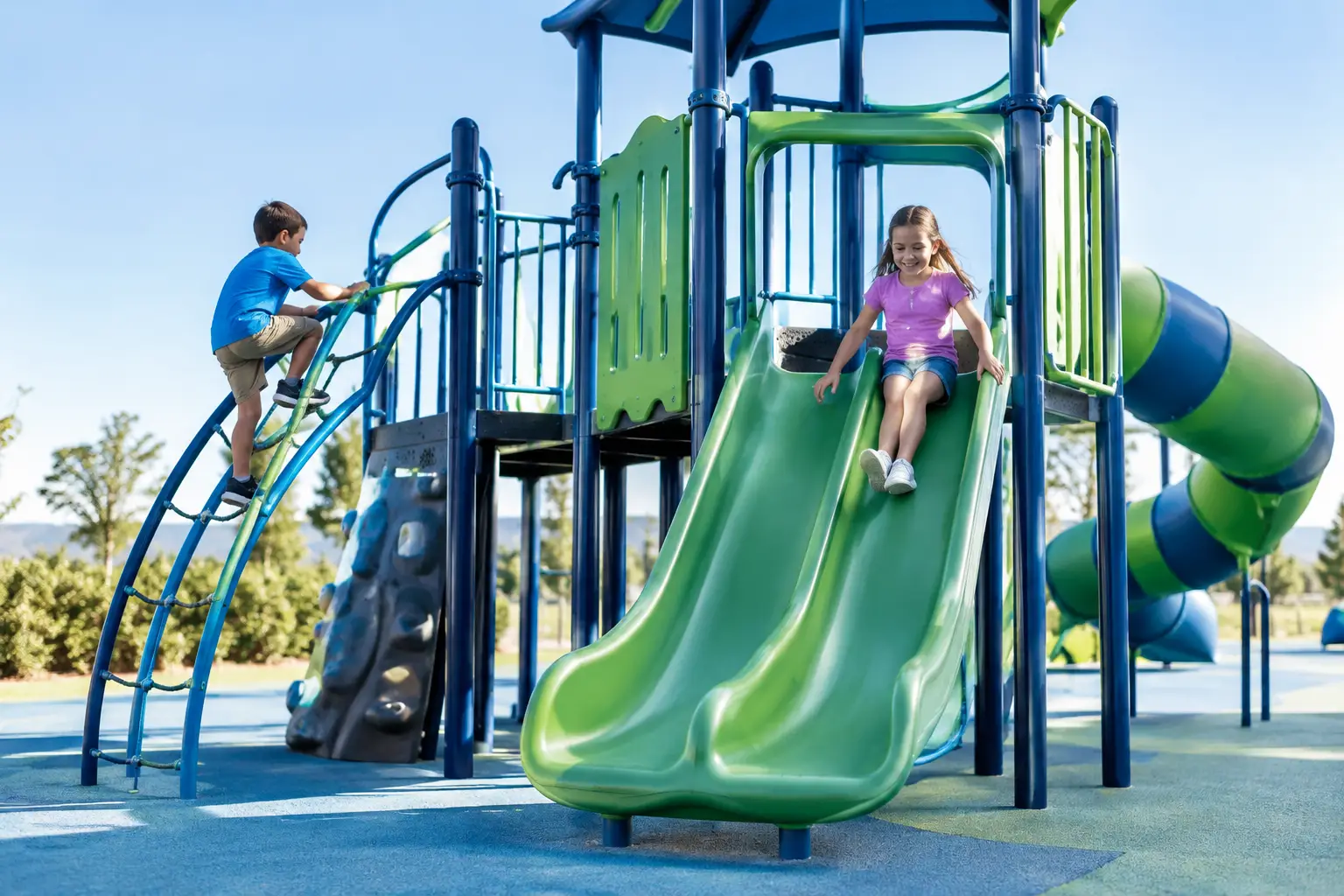
A playground can look impressive on day one and still be the wrong fit for a school, church, childcare center, or HOA. What makes playground equipment commercial is not simply a taller tower, a larger slide, or a label that says “heavy-duty.” It is the full system: equipment designed for frequent public use, installed on a properly prepared site, paired with protective surfacing, and maintained for years of active play.
For Dallas-Fort Worth organizations, that difference matters. A commercial playground serves many children with different ages, abilities, and play styles throughout the day. It needs to support big energy, regular inspections, changing weather, and the daily wear that comes with being a favorite gathering place.
What Makes Playground Equipment Commercial?
Commercial playground equipment is designed, manufactured, installed, and maintained for shared-use environments. Think schools, preschools, parks, apartment communities, churches, daycares, and neighborhood common areas. Unlike a typical residential swing set built for one family’s backyard, commercial equipment is expected to handle higher traffic and more varied use.
That does not mean every commercial play area needs the same equipment. A small church preschool may need a compact structure for children ages 2 to 5, while an HOA may need a larger climber and swing area that keeps elementary-age children moving. The right choice depends on the expected number of users, age group, site size, budget, supervision, and accessibility needs.
The commercial distinction comes from how those needs are addressed from the ground up.
Built for High-Frequency Play
The clearest difference is the level of use. A residential playset may serve a few children and their friends. A commercial playground can see dozens or hundreds of children in a week, sometimes in a single day.
Commercial components are selected with that workload in mind. Hardware, swing hangers, chain connections, slides, handholds, climbing features, and support systems need to stand up to repeated movement, weight shifts, weather exposure, and routine cleaning. Wear points deserve special attention because those are the areas children use most often.
Material choice also matters. Commercial systems commonly use materials engineered for outdoor durability, including heavy-gauge steel, corrosion-resistant hardware, commercial plastics, and durable coated components. Premium wood can also be part of an outdoor play environment, but it needs to be suited to the application and supported by a thoughtful maintenance plan. In North Texas, strong sun, heat, rain, and shifting soil all put pressure on outdoor equipment over time.
A larger structure alone does not make a playground commercial. The question is whether every major component is made to support the use the site will actually receive.
Safety Standards Shape the Design
Commercial playgrounds are typically planned around recognized public-playground safety guidance and standards, including ASTM specifications and Consumer Product Safety Commission guidelines. These documents influence far more than the equipment itself. They address issues such as openings that could create entrapment hazards, guardrail height, pinch points, protrusions, fall zones, and the spacing between play events.
For example, swings need adequate clearance in front of and behind the swing path. A slide’s exit zone needs room for a child to land and move away. Climbers, decks, and elevated platforms require carefully designed protective barriers. These details may not be the first things a child notices, but they are the details that make a play space work better for the adults responsible for it.
It is also worth knowing that “commercial grade” is not a universal legal stamp. Product claims should be reviewed alongside the equipment specifications, intended age range, installation requirements, and the conditions at the site. A strong commercial playground plan is based on the whole project, not on one phrase in a product description.
Age-Appropriate Design Is Part of Safety
A playground built for preschoolers should not be treated like a scaled-down version of a big-kid playground. Younger children need lower platforms, easier climbing routes, appropriately sized handholds, and play features that support developing balance and coordination.
Older children may need more challenge, including taller climbers, overhead activities, and faster-paced play features. When a site serves multiple age groups, separate play zones can help each group find the right level of adventure without turning the playground into a traffic jam.
Protective Surfacing Is Not an Add-On
The ground beneath the equipment is one of the biggest parts of a commercial playground project. Proper surfacing helps reduce the severity of injuries from falls, and it must extend through the required use zones around the equipment.
Options can include engineered wood fiber, rubber mulch, poured-in-place rubber, rubber tiles, and other tested systems. Each comes with trade-offs. Engineered wood fiber can be a practical option for many properties, but it requires regular raking and replenishment to maintain the right depth. Poured rubber can offer a clean, accessible finish, but it generally costs more upfront and requires professional installation over a suitable base.
Drainage matters just as much in DFW. Water that collects under or around a play structure can affect surfacing, create muddy areas, and contribute to site wear. Borders, grading, drainage planning, and the correct amount of ground material help keep the play area cleaner, safer, and easier to maintain.
A playground is only as dependable as the surface children land on. That is why ground preparation should be part of the conversation before equipment is selected, not after delivery day.
Installation Is a Major Part of the Investment
Commercial equipment must be installed according to manufacturer requirements and the site plan. That can involve precise layout, anchoring, leveling, component assembly, surfacing depth, and clearance verification. It also requires a clear look at the site before work begins.
Tree roots, slopes, utility locations, irrigation lines, concrete paths, gates, and access for delivery can all affect the installation plan. A space may appear large enough at first glance but still need adjustments to preserve required use zones and safe circulation around the playground.
Professional installation helps turn a collection of parts into a managed outdoor environment. It is particularly valuable for organizations where staff members already have full schedules and cannot take on freight coordination, assembly, site prep, and follow-up adjustments themselves.
Dallas Playsets helps organizations approach commercial play with that bigger picture in mind, including equipment planning, professional installation, borders, ground materials, and ongoing service support.
Commercial Playgrounds Need a Maintenance Plan
Even the best equipment needs regular care. Commercial use creates predictable wear, especially at moving connections, swing seats, chains, slide transitions, climbing grips, fasteners, and surfacing. A playground that receives frequent attention is easier to manage than one that is only inspected after something looks wrong.
A useful maintenance program usually includes routine visual checks by on-site staff, scheduled detailed inspections, surfacing checks, and a process for taking damaged equipment out of service until it is repaired. Staff should look for loose hardware, damaged components, exposed sharp edges, worn swing seats, standing water, and areas where loose-fill surfacing has become compacted or displaced.
Texas weather adds another reason to stay proactive. Heat can affect surface temperatures, storms can move ground material, and seasonal moisture can expose drainage issues. Maintenance is not a sign that a playground was poorly built. It is part of responsible ownership for any active outdoor space.
Residential and Commercial Equipment Serve Different Jobs
A premium backyard playset can be an outstanding investment for a family. It brings climbing, swinging, sliding, and imaginative play close to home, without requiring a trip across town. But a residential playset is designed around a different ownership model and user volume than a shared playground.
Commercial equipment is the better fit when an organization is opening its play space to a broad group of children, expects regular daily use, needs a planned safety surface, or has a duty to maintain a public or semi-public recreation area. For a private backyard, a premium residential playset with professional installation may be exactly the right answer.
The key is not to buy more playground than a property needs or less support than an organization can responsibly manage. Choose equipment, surfacing, and installation services that match the real demands of the space. When those pieces work together, children get what they came for: a place to climb higher, play longer, and head home happily worn out.