
Blog · October 10, 2026
Can Playsets Fit Sloped Yards? Yes, With Prep
A backyard does not have to be perfectly flat to become the place where your kids race outside after school, climb higher, and stay active longer. So, can playsets fit sloped…
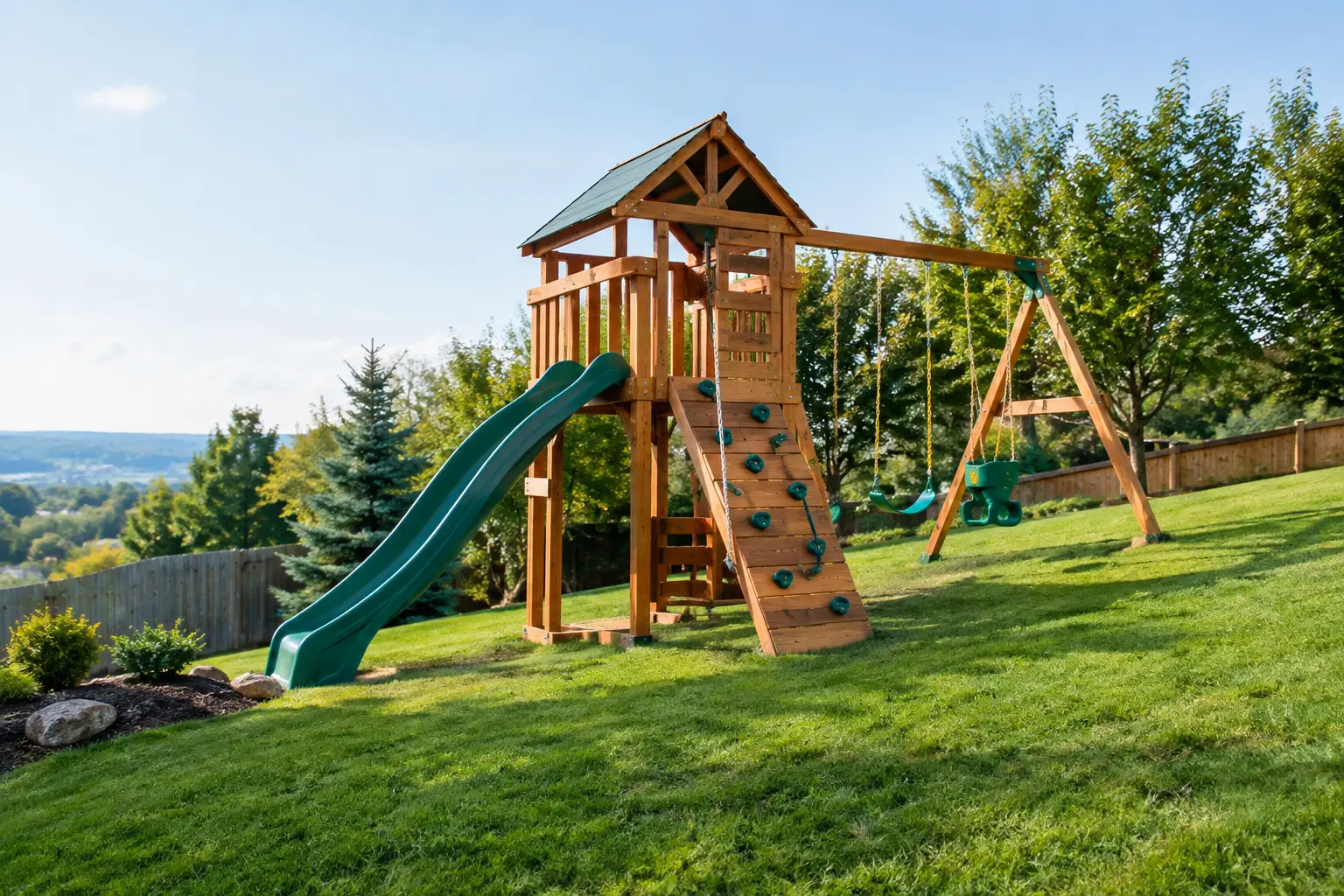
A backyard does not have to be perfectly flat to become the place where your kids race outside after school, climb higher, and stay active longer. So, can playsets fit sloped yards? Absolutely - but the playset cannot simply be placed on the slope and called done. The site needs a smart plan that creates a level, stable, well-drained play area around the equipment.
For many Dallas-Fort Worth families, a slope is just part of the property. It may help rain move away from the home, create a more interesting landscape, or run along a fence line that otherwise feels underused. With the right ground preparation and professional installation, that part of the yard can still support a premium wooden playset built for years of backyard adventure.
Can Playsets Fit Sloped Yards Safely?
Yes, when the slope is evaluated before you select the playset and before installation day. A gentle slope is often manageable with site grading, a leveled pad, or a retaining solution. A steeper or uneven yard may need more substantial work, and in some cases, another location in the yard will be the safer, more practical choice.
The goal is not to make every inch of the backyard level. The goal is to create a properly sized level zone for the playset, its use area, and protective surfacing. Swings need room in front and behind their arc. Slides need a clear landing area. Climbers, monkey bars, and elevated forts all need space where children can step down, jump off, or occasionally tumble without meeting a hard edge or sharp grade.
A playset that looks level at the fort but sits over changing ground elevations can create problems over time. Posts may settle differently, the structure can feel out of square, and rainwater may collect where children play. Premium equipment deserves a foundation plan that supports both safety and long-term performance.
Start With the Slope, Not the Playset
It is tempting to fall in love with a towering Sky Loft, a tube slide, or a multi-activity Gorilla Playset first. Those features are exciting, and they can absolutely be part of the backyard you envision. Still, the best first step is measuring the available space and understanding how the ground changes across it.
Look at the proposed area after a hard rain. Notice where water travels, where it collects, and whether the soil stays soft or muddy. North Texas clay soil can hold water when drainage is poor, then dry and shift during hot stretches. That does not rule out a wooden playset, but it makes thoughtful site preparation especially valuable.
Also consider access. A crew needs a practical path to carry equipment and materials into the backyard. If you are adding a border and ground cover, access affects the installation plan as well. Tight side yards, gates, landscaping, utility equipment, and fence elevations can all influence what makes sense.
Gentle slopes usually offer the most flexibility
A mild slope can often be corrected by building up the lower side with compacted base material or removing soil from the higher side. The finished play area should be level, firm, and large enough to include the required clearance around the equipment.
This approach preserves more of your yard than trying to regrade the entire space. It can also create a clean, intentional look when paired with a defined border and protective ground material. The result feels like a dedicated outdoor play zone, not a swing set squeezed onto a hill.
Steep slopes may need a bigger plan
When the grade changes sharply across the play area, simply adding loose fill is not enough. Soil needs to be properly retained and compacted so it will not wash away, settle, or shift beneath the structure. Depending on the site, that may mean terracing, a retaining wall, drainage improvements, or selecting a flatter section of the yard.
There is a trade-off here. A large elevated playset can be a fantastic centerpiece, but placing it on a difficult slope may require site work that changes the project budget and timeline. A slightly smaller configuration on a well-prepared area can be the better investment if it leaves ample clearance, safer footing, and room for children to play freely.
Build a Level Play Zone, Not Just a Level Fort
Leveling the posts alone is not the finish line. Children use the entire footprint around a playset, especially around swings, slide exits, ladders, and climbing walls. The ground should transition smoothly from the prepared play area to the rest of the yard. Sudden drop-offs, exposed border edges, and uneven surfaces turn normal running and landing into avoidable hazards.
A professionally planned border can help contain engineered wood fiber, rubber mulch, or other appropriate protective surfacing while giving the space a finished appearance. More importantly, it helps establish the area that needs to stay level and maintained. Ground material should be installed at an appropriate depth and checked periodically, because active kids naturally move it away from high-traffic spots.
Drainage belongs in the same conversation. A leveled pad without a water-management plan can become a shallow basin after a storm. The prepared area should direct water away from the playset rather than trapping it beneath the structure or against a border. On certain yards, a modest grade around the outside of the play zone, drainage rock, or a swale may be part of the solution.
Choose Features That Work With Your Site
The backyard site should shape the final playset configuration. On a compact leveled area, a vertical design with a clubhouse, climbing wall, and tower may make better use of the footprint than a wide layout with multiple swinging stations. If the property has room along the contour of the slope, a longer configuration may be possible after grading.
Pay close attention to slide placement. A long wave slide or tube slide needs a safe, clear run-out at the bottom. Swings need their own broad use zone. A playset may physically fit in an area while still lacking the clearance needed for children to use every feature safely.
This is where professional site planning saves families from expensive surprises. It is easier to adjust a layout on paper than to discover after installation that a slide exit faces a descending grade, a swing beam sits too close to a fence, or the best route for rainwater runs straight through the new play area.
Why Professional Installation Matters on Uneven Ground
Wooden playsets are designed to be assembled square, anchored correctly, and checked for stability. On sloped ground, those details become even more critical. Posts, platforms, braces, ladders, and swing beams must work together exactly as intended. Trying to compensate for a slope during a do-it-yourself build can lead to improvised shimming, uneven support, or a structure that does not sit correctly.
A professional installation team can assess the prepared site, assemble the equipment to manufacturer specifications, and identify issues before they become headaches. For busy DFW parents, that means less time spent interpreting hardware bags and more confidence that the kids' new favorite place has been set up with care.
Dallas Playset Company can support the full process, from selecting quality Gorilla Playsets to local delivery, installation, borders, ground materials, tune-ups, and future moves. That hands-on support is especially useful when a sloped yard requires more planning than a simple flat-lawn installation.
Plan for Maintenance After the Big Reveal
Even a well-prepared site needs occasional attention. After heavy rain, walk around the play area and look for erosion, standing water, exposed landscape fabric, or surfacing that has shifted downhill. Check that borders remain secure and that the ground around high-use areas stays even.
The playset itself also benefits from regular inspection. Tighten hardware as needed, examine wood for weathering, and make sure anchors and structural components remain secure. A seasonal tune-up is a practical way to protect a premium backyard investment as children grow from careful climbers into fearless adventurers.
A sloped yard is not a reason to settle for less outdoor play. It is a reason to plan the site carefully, protect the investment, and build a backyard where your family can play big with confidence.