
Blog · September 26, 2026
Why Do Playsets Need Anchors for Safe Backyard Play?
A wooden playset can look solid enough to stay put forever, especially once it is loaded with a clubhouse, tube slide, climbing wall, and swings. But children do not play in…
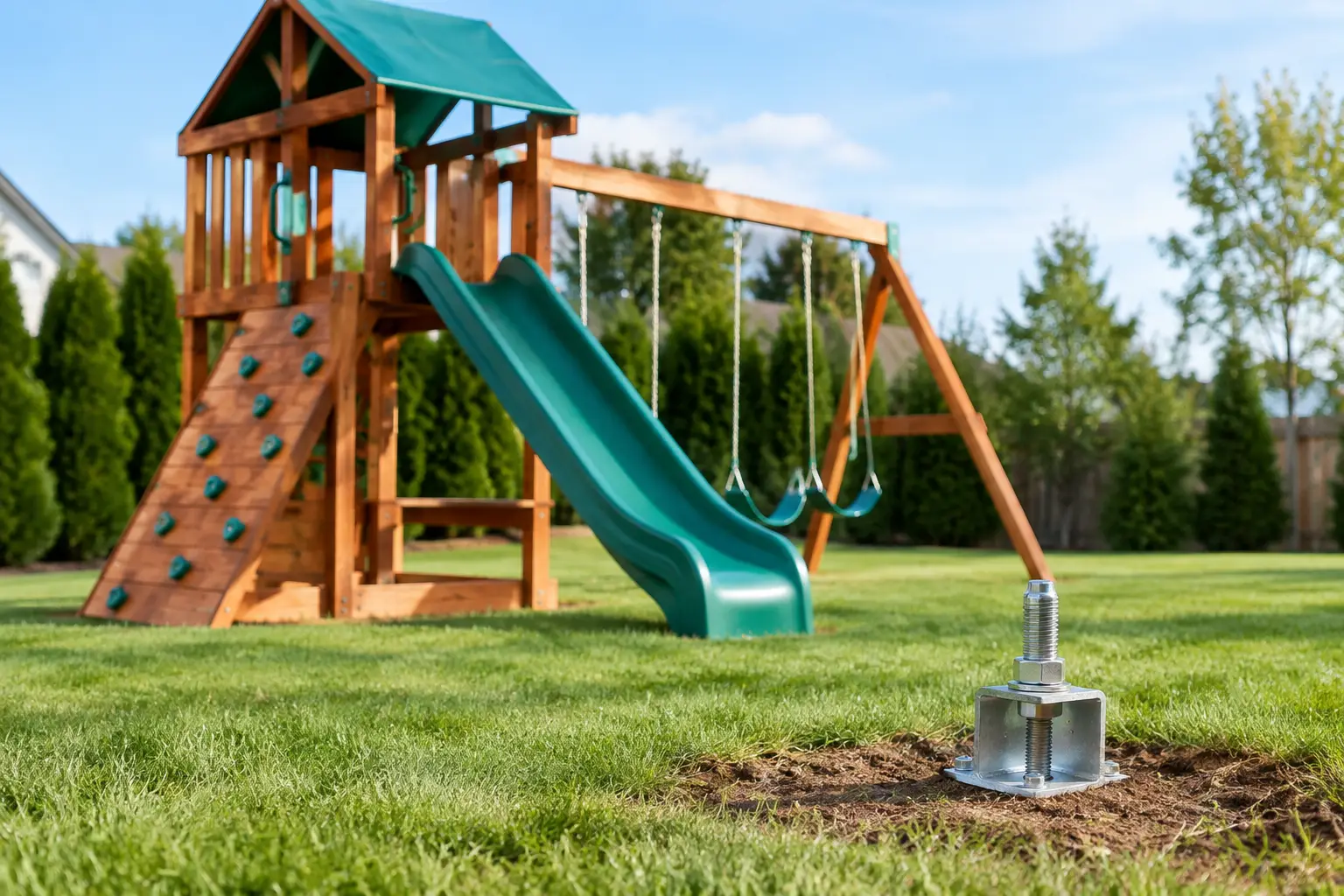
A wooden playset can look solid enough to stay put forever, especially once it is loaded with a clubhouse, tube slide, climbing wall, and swings. But children do not play in straight lines or gentle motions. They race up ladders, lean hard into turns, pump swings high, and invite friends over. So, why do playsets need anchors? Anchors help keep the structure stable where it belongs while children enjoy the big, active backyard play it was built for.
For Dallas-Fort Worth families investing in a premium swing set, anchoring is not a small finishing detail. It is a key part of a complete installation. The right anchoring method works with the playset’s frame, the yard’s soil, and the manufacturer’s instructions to create a safer, more dependable place for years of climbing, swinging, sliding, and make-believe.
Why Do Playsets Need Anchors?
A playset anchor connects the structure to the ground so movement at the top of the set does not turn into unwanted movement at the base. Think about a child swinging hard from one end of a large playset while another child climbs the rock wall or crosses a bridge. Those changing forces can make a freestanding structure shift, rack, or lift slightly if it is not properly secured.
Anchors are designed to resist that motion. They help prevent the legs from creeping across the yard, reduce the chance of the structure becoming uneven, and add stability when children use the equipment the way children naturally do - with energy and imagination.
Anchoring also matters when weather arrives. North Texas can deliver strong gusts, driving rain, dry stretches, and fast-changing conditions. A tall, elevated fort creates more surface area for wind than a simple ground-level play structure. Properly installed anchors give the playset a stronger connection to the site, helping it remain steady through normal backyard conditions.
No anchor can make an improperly assembled or poorly maintained playset safe. It is one part of a larger system that includes correct assembly, level ground, sound lumber and hardware, adequate use zones, and protective ground material. But leaving anchors out means skipping an important layer of support.
Anchors Help Protect the Playset Investment
Premium wooden playsets are made for years of family use, not one short season. Still, repeated shifting can create problems over time. When a frame moves, hardware may loosen, boards can sit under uneven stress, and doors, ladders, or accessories may stop lining up as they should. A small amount of movement today can become an annoying maintenance issue later.
Anchoring helps the frame hold its intended position. That can make routine inspections more straightforward because the playset stays level and predictable. It also helps protect the work that goes into preparing the backyard, whether the installation includes a bordered play area, mulch, rubber material, or another suitable ground-cover plan.
There is a practical benefit, too. Families often add accessories after the initial installation: a ship’s wheel, picnic table, extra climbing feature, or new swing option. A securely installed foundation gives you more confidence as the play experience grows with your children.
The Right Anchor Depends on Your Yard
There is no single anchor that fits every backyard. The best approach depends on the playset model, ground conditions, slope, landscaping, and the manufacturer’s installation requirements. A smaller swing set on level ground may call for a different approach than a large Sky Loft-style structure with multiple elevated activities and a tube slide.
Soil is especially relevant around Dallas-Fort Worth. Some yards have dense clay, while others have fill dirt, loose soil, irrigation lines, roots, slopes, or drainage patterns that need careful attention. Heavy rain can soften certain areas; long periods without rain can change the ground in other ways. An anchor that is appropriate for one part of the metroplex may not be the right choice for another yard.
This is why professional site evaluation matters. Before installation, the crew should consider whether the selected location is level enough, clear of obstacles, and sized to allow for safe play around swings, slides, and climbing elements. They should also follow the playset manufacturer’s requirements rather than treating anchoring as a one-size-fits-all add-on.
Ground Anchors and Concrete Setups
Many residential playsets use ground anchors installed at designated points on the frame. Depending on the equipment and site requirements, these may be driven or screwed into the soil and secured to the playset legs with the proper hardware. They are intended to hold the set in position without creating a tripping hazard in the play area.
Some situations may require a concrete-based installation or a more specialized anchoring plan. This can be appropriate for certain equipment, soil conditions, or commercial settings, but it is not automatically better for every residential yard. Concrete changes drainage, can complicate future relocation, and must be placed carefully so it does not interfere with protective surfacing or create exposed hard edges.
The best choice is the one that matches the equipment instructions and the actual conditions on site. A qualified installer can explain what is recommended for your selected playset and why.
Proper Installation Is More Than Tightening Hardware
Anchors only work as intended when the playset itself is assembled correctly. The frame needs to be level, the legs need to be positioned accurately, and all structural connections need to be tightened according to the manufacturer’s specifications. Installing anchors before the structure is properly squared and leveled can lock in a problem rather than solve one.
A professional installation process typically starts with the site, then moves through assembly, leveling, anchoring, and a final check of hardware and accessories. It is careful work, particularly with large wooden swing sets that include multiple decks, rooflines, monkey bars, climbing features, and slides.
For busy parents, this is where full-service support earns its place. Instead of coordinating freight, deciphering a long assembly manual, sourcing tools, and hoping the ground is suitable, you can have the project handled as one organized backyard upgrade. Dallas Playsets can pair premium play equipment with local delivery, professional installation, ground-preparation options, and ongoing tune-ups when your family needs them.
What Homeowners Should Check After Installation
Anchors are not a set-it-and-forget-it item. Backyard conditions change, and playsets get plenty of use. A quick seasonal inspection helps you catch small issues before they become bigger ones.
Look for visible shifting around the legs, loose anchor brackets, damaged hardware, or exposed components that could create a hazard. Check whether the set still appears level, especially after severe weather, landscaping work, or changes to the ground material. If the playset has begun to lean, wobble, or move more than expected during normal play, pause use and have it evaluated.
It is also smart to inspect the rest of the structure at the same time. Look over swing hangers, chains, rope, slide connections, handholds, deck boards, and bolts. Wood naturally responds to outdoor conditions, so regular care is part of owning a premium wooden playset. Maintenance visits can help restore confidence when your children have grown, the set has weathered a few Texas summers, or you are preparing the backyard for another season of play.
Anchoring Matters When a Playset Moves
Families move, yards change, and sometimes a beloved swing set needs a new home within the same yard or across town. When that happens, anchors must be removed and the playset reinstalled correctly at the new location. Simply lifting a structure, dragging it, or reinstalling it with old hardware without inspection can damage the frame or compromise stability.
A playset move is a good time to reassess the site. The new yard may have different soil, grade, drainage, or available play space. It is also an opportunity to replace worn components, refresh ground material, and make sure the anchor system suits the equipment and location.
A great backyard play area should feel exciting to children and manageable to parents. Proper anchoring helps deliver both: more confidence during everyday play and a stronger foundation for the backyard memories still ahead.