
Blog · November 5, 2026
Playground Safety Surfacing for DFW Backyards
A beautiful wooden playset deserves more than a patch of grass beneath it. The right playground safety surfacing gives children a more forgiving place to land after a missed…
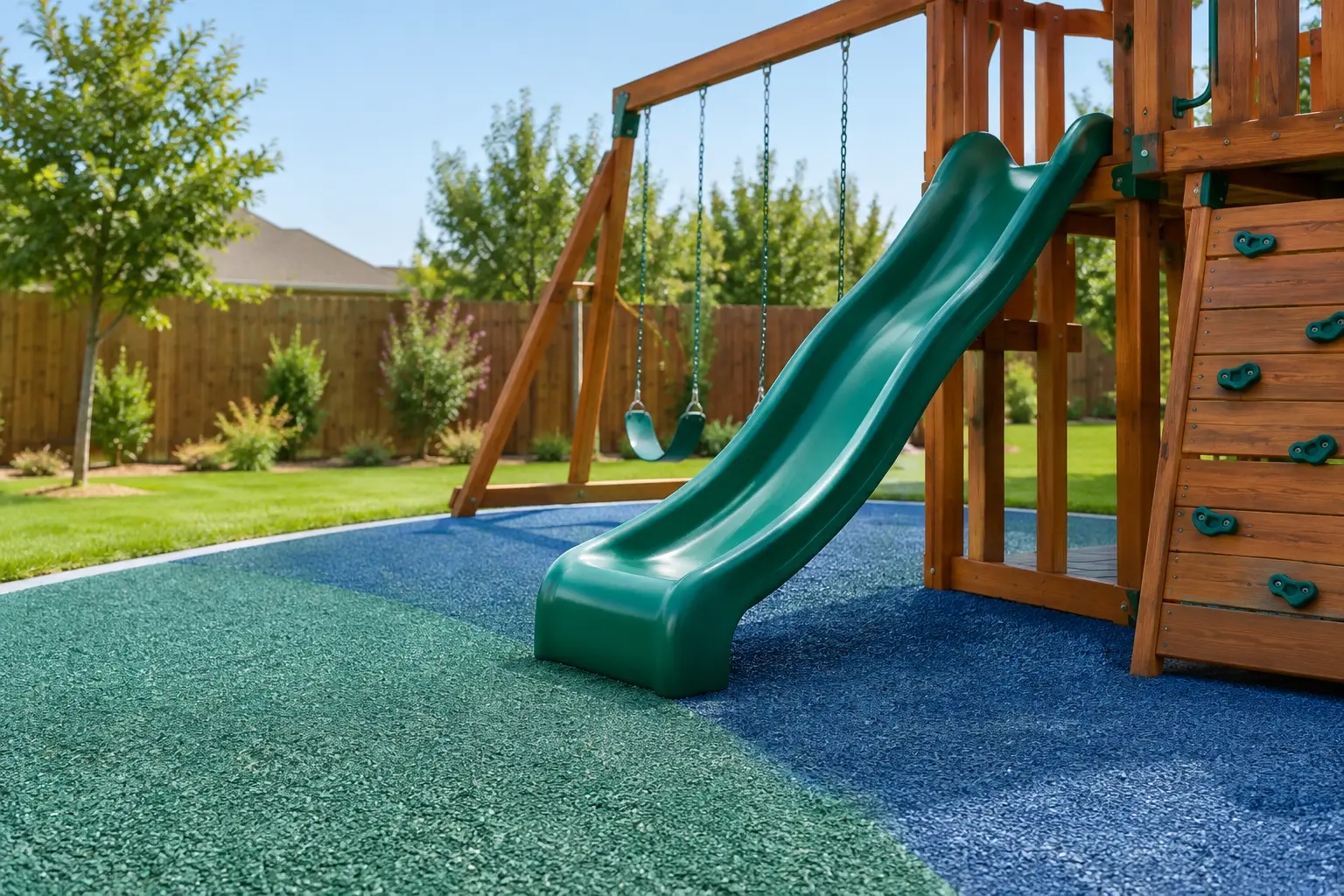
A beautiful wooden playset deserves more than a patch of grass beneath it. The right playground safety surfacing gives children a more forgiving place to land after a missed rung, a fast slide exit, or an enthusiastic jump from the monkey bars. It also helps protect your lawn, define the play area, and make your backyard adventure feel finished from day one.
For Dallas-Fort Worth families, the decision is not simply about picking a material that looks good. North Texas heat, heavy rain, clay soil, active kids, and the height of your playset all affect what will work best. A premium swing set is built for years of climbing, swinging, and imaginative play. Its ground surface should be ready for the same job.
Why Playground Safety Surfacing Matters
Most backyard play injuries happen from falls, not from the play equipment itself. Grass and bare dirt can feel soft underfoot, but neither is designed to cushion a fall consistently. Grass gets thin in high-traffic landing zones, while dirt becomes hard, uneven, dusty, or muddy depending on the weather.
Purpose-built surfacing creates a cushioned layer under and around the equipment. The needed depth depends on the material and the height of the equipment. A low, simple play structure may have different needs than an elevated Gorilla Playset with a tall deck, climbing wall, swings, and tube slide. That is why the surface plan should be considered alongside the specific playset, not added as an afterthought.
Surfacing also creates a clear use zone. Kids need room to step off a slide, dismount a swing, or move around a climbing structure without tripping over edging, roots, patio furniture, or landscape rocks. A properly planned play area gives them space to play big while giving parents more peace of mind.
Choosing the Right Playground Safety Surfacing
There is no one material that fits every DFW backyard. The best choice comes down to your playset design, yard conditions, preferred appearance, budget, and willingness to perform routine upkeep.
Engineered wood fiber
Engineered wood fiber is a popular choice for residential and commercial play areas because it has a natural look and provides dependable cushioning when installed at the correct depth. It is different from ordinary landscaping mulch. Quality playground wood fiber is made to knit together underfoot while still offering impact absorption.
This option fits especially well around premium wooden swing sets because the look feels cohesive and blends easily with Texas landscaping. It drains well when the site below it is prepared correctly, and it is comfortable for barefoot summer play compared with many hardscape alternatives.
The trade-off is maintenance. Active children move loose material around, particularly beneath swings and at slide exits. Wood fiber settles over time and may need to be raked back into place or topped off. It can also break down naturally, so plan on checking its depth regularly.
Rubber mulch
Rubber mulch offers long-lasting cushioning and does not decompose like wood fiber. It is available in a range of colors, stays in place better than many loose-fill products, and can be a practical option for families who want fewer material replacements over the years.
However, rubber mulch can become noticeably hot during a Dallas summer afternoon, especially in full sun. It also carries a higher upfront cost and has a more manufactured appearance than wood fiber. For some homeowners, those trade-offs are worthwhile. For others, the natural look and cooler feel of wood fiber are a better match for their backyard.
Poured-in-place rubber and rubber tiles
Poured rubber and interlocking rubber tiles create a clean, accessible-looking surface with a polished finish. These systems can work well for commercial settings, childcare centers, churches, and organizations that need a highly defined play zone with a predictable walking surface.
For a residential backyard, cost is usually the main consideration. Poured surfaces require a carefully prepared base and professional installation, and repairs can be more involved if a section is damaged. Heat is another factor in North Texas. These surfaces can absorb a great deal of sun, so shade planning matters.
Grass, artificial turf, and ordinary mulch
Grass is attractive, but it should not be treated as fall protection under elevated equipment. It can work around the outer edges of a play area, yet high-use zones will wear down quickly. Artificial turf can look tidy and reduce mud, but it needs a cushioning underlayment specifically designed for playground use if it will serve as protective surfacing.
Ordinary bark mulch and decorative landscape mulch may seem like easy substitutes, but they are not necessarily rated or installed for playground fall zones. Gravel, pea gravel, compacted dirt, concrete, pavers, and standard turf are not suitable beneath active play equipment where falls are expected.
Depth, Borders, and the Play Zone
Surfacing material only works when there is enough of it in the right place. Loose-fill products need sufficient depth to provide cushioning, and they need room to remain contained. A border is not just a decorative frame. It holds the material in place, creates a defined play area, and helps keep the surface depth more consistent.
The border should be planned with the full equipment footprint in mind. Swings need generous clearance in front and behind the beam, while slides and climbers need open landing areas. The highest accessible point on the structure also affects the recommended surfacing depth and extent. This is where a professional site review can prevent expensive do-overs later.
Be careful not to place a border where a child could land on it during normal play. The goal is a broad, protected zone around the equipment, not a tight mulch bed tucked beneath the playset.
Plan for North Texas Drainage and Heat
A great surface can still fail if the ground underneath it holds water. Many DFW yards have compacted clay soil that drains slowly after heavy rain. If water collects beneath the play area, loose-fill material can stay wet, shift, or develop low spots. A soggy play zone also means more mess coming back into the house.
Ground preparation should begin with a reasonably level area and a plan for drainage. Depending on the yard, that may mean grading, a compacted base, drainage fabric, or a slight slope that moves water away from the play area and home. The approach depends on the site. A flat-looking yard can still have drainage issues once a border and several inches of surfacing are added.
Sun exposure matters too. An open yard is wonderful for play, but dark rubber surfaces and metal components can get hot in direct Texas sun. Shade from mature trees, a planned shade structure, or strategic placement can make afternoon play more comfortable. Avoid placing the playset where branches, roof runoff, or sprinkler overspray will create ongoing problems.
Keep the Surface Working Over Time
Playground surfacing is part of playset ownership, not a one-time accessory. A quick monthly check goes a long way. Walk the entire use zone and look for exposed ground, compacted areas, low spots, drainage problems, and material that has migrated beyond the border.
Pay extra attention beneath swings, at the bottom of slides, and around climbing access points. These are the places where children land, drag their feet, and move material most often. Rake loose-fill material back into these areas before bare spots develop, and replenish it when the depth is no longer where it needs to be.
After major storms, inspect the area for washout, standing water, displaced borders, and branches or debris. Before busy seasons, pair your surfacing check with a playset tune-up: inspect hardware, swings, ropes, slides, and moving parts so the whole backyard play space is ready for action.
Make the Ground Plan Part of Your Installation
Choosing a playset is exciting, but the ground beneath it is what helps make daily play safer and more comfortable. Planning the play area before delivery can prevent rushed decisions, uneven placement, and a backyard project that feels unfinished.
Dallas Playsets can help families think through the full setup, including professional installation, borders, and appropriate ground materials. The right approach makes a substantial backyard investment feel smooth and stress-free from start to finish.
Give your children a space built for big swings, bold climbs, and countless backyard memories - with a surface that is ready to support every landing along the way.