
Blog · November 3, 2026
Do Wooden Playsets Attract Termites in Dallas?
A premium backyard playset should be a place for big climbs, fast slides, and everyday family memories - not another source of worry. So, do wooden playsets attract termites?…
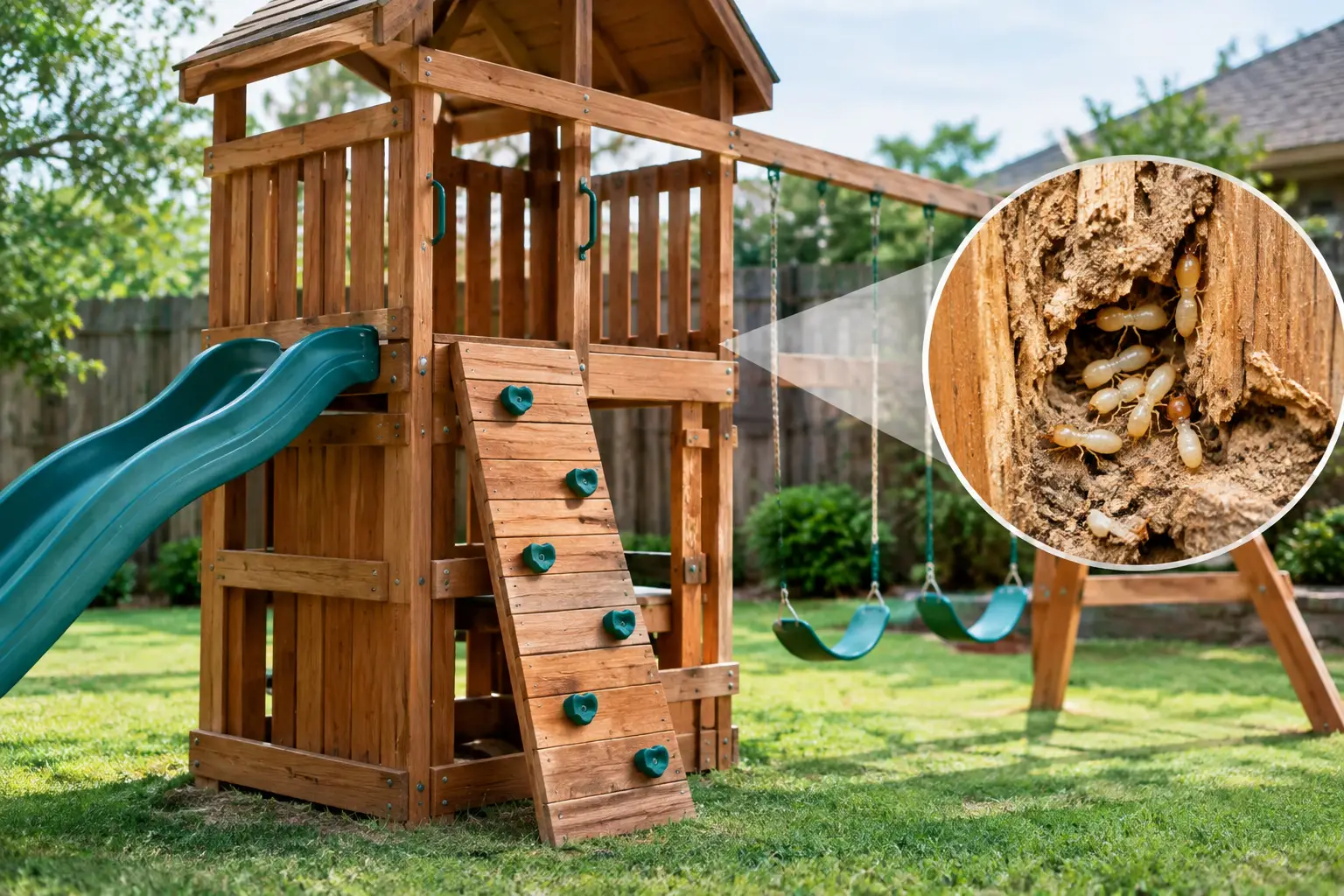
A premium backyard playset should be a place for big climbs, fast slides, and everyday family memories - not another source of worry. So, do wooden playsets attract termites? Not automatically. Termites are attracted to accessible wood, moisture, and soil conditions, not to the fact that a swing set happens to be made of wood. With a quality playset, proper installation, and routine care, families across Dallas-Fort Worth can greatly reduce the risk.
Do Wooden Playsets Attract Termites? The Straight Answer
Wood is a food source for termites, especially subterranean termites common in North Texas. But a wooden playset sitting in a well-drained yard is very different from a stack of damp lumber left directly on the ground. Termites need moisture and protected routes from the soil to the wood they consume.
That means the bigger question is not simply whether a playset is wooden. It is whether its supports, surrounding landscape, and drainage create the conditions termites prefer. A professionally installed, elevated playset made from properly treated lumber is far less inviting than untreated wood with constant ground contact and standing water nearby.
No wood product is completely termite-proof. Pressure treatment helps protect lumber, but it does not replace smart site planning or regular inspections. Think of it as one valuable layer in a practical backyard maintenance plan.
Why North Texas Yards Need Extra Attention
Dallas-Fort Worth weather can put outdoor structures through a lot. Heavy rain, humid stretches, intense heat, and shifts in soil moisture all affect the ground around a playset. After a storm, low spots in the yard may hold water longer than expected. A sprinkler head aimed at a support post can create the same ongoing moisture issue week after week.
Termites generally travel underground and may build mud tubes to reach a structure. They are not usually drawn to a dry, well-maintained swing set from across the yard. They are more likely to investigate when they can move from moist soil into wood without much exposure.
Wood-to-soil contact is the main condition to avoid. Posts should be installed correctly, with the playset designed and anchored for stability while limiting unnecessary wood exposure at ground level. Good drainage matters just as much. If water consistently pools beneath the fort, slide, or climbing area, address the drainage before the problem gets bigger.
What Makes a Wooden Playset More Vulnerable?
A well-built playset can provide years of backyard adventure, but neglected conditions can change the equation. The most common risk factors are moisture, direct soil contact, damaged protective finishes, and nearby cellulose debris.
For example, mulch piled against wooden supports can hold moisture where you do not want it. Mulch can still be part of an attractive, safer play area, but it should be installed with proper spacing and site preparation rather than packed tightly around structural wood. The same applies to fallen branches, old landscape timbers, firewood piles, and scrap lumber. Keep these materials away from the playset area whenever possible.
Cracks, rot, or worn areas also deserve attention. Termites do not cause every soft spot in outdoor wood. Moisture damage and normal weathering can weaken lumber on their own. Still, damaged wood may retain water and become easier for pests to access, so it is worth correcting promptly.
A poorly positioned irrigation system is another common culprit. Watering the lawn is necessary in Texas, but a sprinkler that repeatedly soaks a playset leg, deck support, or border is working against your maintenance efforts. Adjust the spray pattern so the equipment is not receiving a daily shower.
How to Protect a Wooden Playset From Termites
Protection starts before installation. Choose a level location with drainage in mind, rather than selecting the lowest, wettest corner of the yard. If grading, borders, or ground materials are needed, handling those details at the beginning creates a safer, cleaner play space and helps limit excess moisture around the structure.
Professional installation is especially useful for a substantial wooden playset. Correct assembly, anchoring, and spacing help preserve the structure and keep safety features functioning as intended. Dallas Playset Company can help families plan a smooth and stress-free project, from preparing the site to installing premium backyard equipment built for serious play.
Once the playset is in place, make quick visual checks part of normal yard care. You do not need to inspect every board each weekend. A closer look a few times a year, plus after major storms, is usually a practical routine for most homeowners.
Look for these signs around the playset and nearby yard areas:
- Pencil-width mud tubes running from soil toward wooden posts or supports
- Soft, hollow-sounding, or visibly damaged wood
- Small piles of wings near the play area, windows, or exterior doors during swarm season
- Persistent puddles, wet mulch, or soil that stays damp around the structure
Mud tubes or suspected termite activity call for a licensed pest control professional. Do not assume a surface spray will solve a subterranean termite issue. Effective treatment depends on identifying the source and protecting the surrounding property, not just treating the visible area of a swing set.
Be Careful With DIY Treatments Around Kids
It is understandable to want a fast fix when you spot a suspicious mark on outdoor wood. But a playset is not the right place for random insecticide applications. Children touch handrails, climb walls, sit on decks, and put their hands near their faces throughout play. Any product used around the equipment should be selected and applied according to its label, with children kept away for the required period.
More importantly, treating the surface of a board may not address termites coming through the soil. If there is evidence of termites, contact a qualified pest professional for an inspection. They can determine whether the activity involves the playset, nearby landscaping, fencing, or the home itself.
For ordinary upkeep, stick to family-friendly fundamentals: remove debris, manage moisture, inspect hardware and wood condition, and schedule repairs before a small issue becomes a larger one. If boards become significantly cracked, splintered, soft, or structurally compromised, replace them with appropriate materials and make sure the repair does not affect the playset's stability.
Seasonal Care Keeps Play Big
Spring is a smart time to inspect the playset after winter weather and before the backyard becomes the center of family life again. Check that the ground drains well, remove leaves and branches caught beneath the structure, and look over the wood, hardware, swings, ropes, and anchors.
Summer brings sprinkler use and intense sun. Watch for overspray and keep an eye on finishes that may need maintenance. Fall is a good time to clear leaf buildup, while winter provides an opportunity to schedule a tune-up, relocation, repair, or site improvement before the next busy play season.
Termite prevention is not about making a wooden playset feel fragile or high-maintenance. It is about giving a major backyard investment the same sensible care you would give a deck, fence, or outdoor kitchen. With dry conditions at the base, thoughtful landscaping, and professional help when warning signs appear, your family can focus on the part that matters most: getting outside and making the backyard the favorite place to play.