
Blog · October 12, 2026
Playground Inspection Guide for Safer Backyard Fun
A great Saturday in the backyard can put a playset through a week’s worth of activity in a few hours. Between big swings, fast slides, climbing races, Texas sun, and sudden…
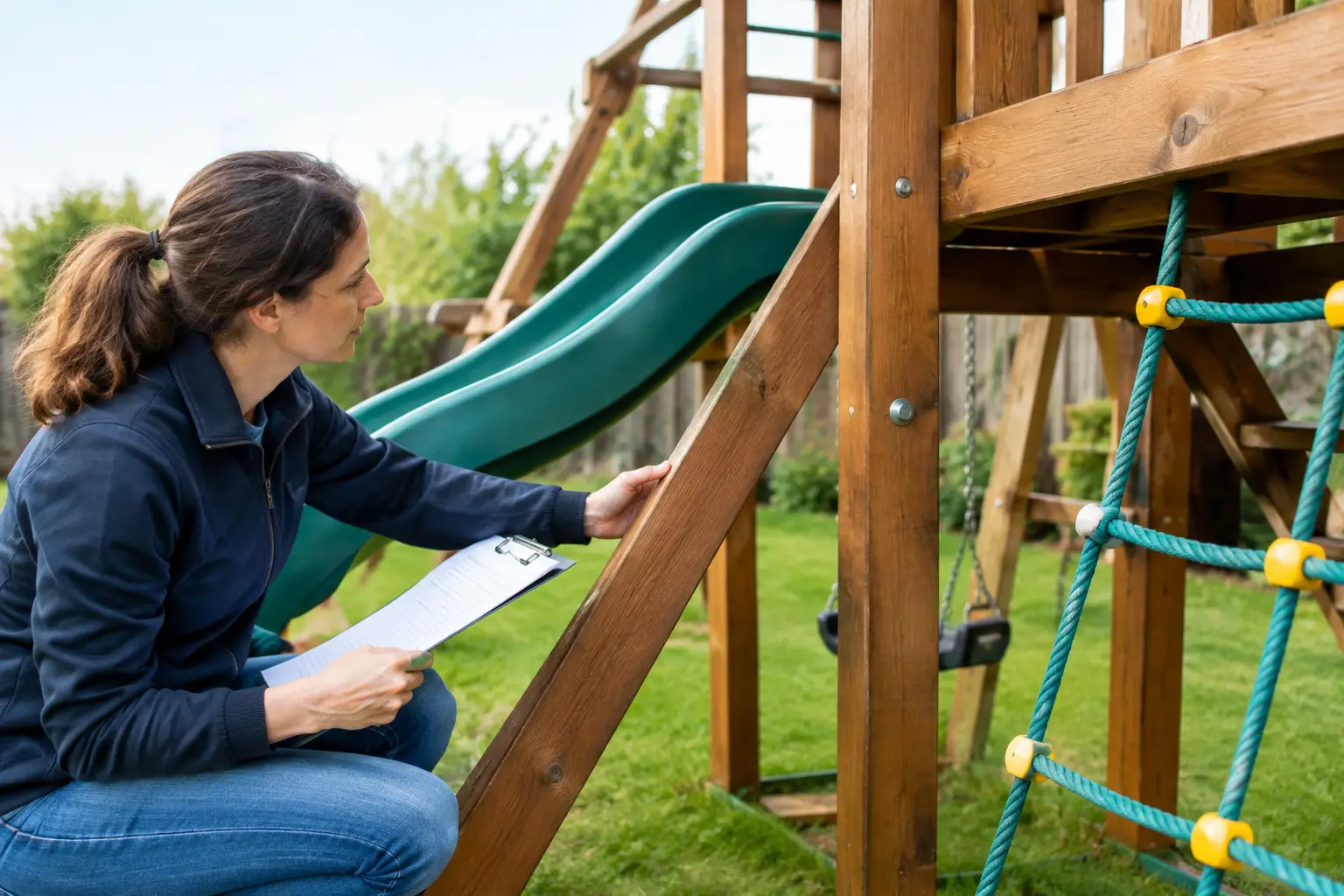
A great Saturday in the backyard can put a playset through a week’s worth of activity in a few hours. Between big swings, fast slides, climbing races, Texas sun, and sudden rain, even premium equipment needs a watchful eye. This playground inspection guide gives busy parents a practical way to check a backyard playset before small issues become interruptions to the fun.
The goal is not to turn every family into a playground technician. It is to build a simple routine that keeps the structure sturdy, the landing area protective, and the kids free to play big with confidence.
Start Every Playground Inspection With the Big Picture
Stand several feet away from the playset before touching anything. Look for changes in its overall posture. A wooden swing set should sit level and feel planted, not lean, rock, or appear to have one corner sinking into the ground. Check whether the soil has washed away near support posts, whether edging has shifted, and whether roots or landscaping changes are crowding the play area.
In North Texas, summer heat can dry and shrink soil, while hard rains can move ground material and expose areas around the base of a structure. A playset that was level at installation may need attention after a season of weather. If you see movement, do not assume a quick shim will solve it. The correct fix depends on the site, the foundation, and how much the structure has shifted.
Next, scan the full activity path: steps, ladders, climbing walls, decks, bridges, monkey bars, swings, and slides. Ask one simple question: can a child move from one feature to the next without encountering a loose part, sharp edge, pinch point, or unsafe landing zone?
A Playground Inspection Guide for Hardware and Wood
Most backyard playset issues begin quietly. A bolt backs out a little. A bracket loosens after repeated swinging. A board develops a crack that initially seems cosmetic. Checking these areas regularly protects the long-term value of your investment and helps avoid a surprise repair when friends are coming over.
Check bolts, brackets, and moving connections
Walk around the structure with a wrench or socket set that fits the manufacturer’s hardware. Look for loose bolts, missing washers, protruding threaded ends, cracked brackets, and worn swing hangers. Tighten hardware that has loosened, but avoid overtightening wood connections to the point that you crush or split the lumber.
Pay extra attention to swing beam connections and the hardware holding the beam to its upright supports. These areas take repeated dynamic force every time a child swings. Also inspect chains, ropes, connectors, and seats. Chains should not have stretched links, worn coatings, rust that compromises the metal, or sharp spots. Rope should not be frayed, stiffened, or worn thin where it meets a connector.
If a swing hanger squeaks, binds, or shows visible wear, treat it as a repair item rather than a nuisance. Smooth movement matters because a failing hanger can change how weight is distributed on the entire swing beam.
Look closely at the wood
Wooden playsets are built for outdoor use, but wood still responds to sunlight, moisture, and seasonal temperature changes. Check for splinters, cracks, warping, soft spots, mold, and insect damage. Light surface checking, which looks like small cracks along the grain, can occur naturally in outdoor lumber. It does not always mean a board has lost structural strength.
Deep cracks, loose railings, rotted areas, or boards that flex under normal pressure deserve faster attention. Run a gloved hand along handrails, ladder rungs, deck boards, and climbing elements to find splinters that are easy to miss visually. Sanding and sealing minor roughness early is often easier than replacing a neglected component later.
Do not paint over a problem just to make the playset look refreshed. Finish products can improve appearance and weather protection, but they cannot restore a board that has become structurally unsound.
Inspect Slides, Climbers, and Elevated Decks
A slide should be secure at its mounting point, smooth along its surface, and clear at the exit. Look for cracks in plastic, loose fasteners, gaps between slide sections, and sharp edges around the entry or exit. On sunny DFW afternoons, slide surfaces can become hot enough to burn skin. Test the temperature with your hand before children climb up, especially on darker components or metal hardware exposed to direct sun.
For rock walls, ladders, cargo nets, and monkey bars, inspect every handhold and attachment point. Rock holds should not rotate or wobble. Ladder rungs need a solid connection at both ends. Cargo nets should be evenly tensioned without torn webbing or loose knots. When a feature is elevated, make sure guardrails are secure and openings have not changed because of missing components or loose boards.
Use common sense about the children using the equipment, too. A feature that remains mechanically sound may no longer suit a child who has outgrown it, or may be too challenging for a younger sibling trying to copy an older one. Adult supervision and age-appropriate play are part of a safe setup, not an afterthought.
Check the Ground Beneath the Fun
The surface under and around a playset does serious work. It helps absorb impact when children jump, fall, or land awkwardly after a big swing. Grass and bare soil may look tidy, but they compact over time and do not provide the same cushioning as properly maintained playground ground material.
Inspect the use zone around the full structure, particularly beneath swings, slide exits, monkey bars, and climbing areas. Rake loose-fill material back into thin spots, remove rocks and debris, and make sure borders are intact. A border that has heaved, cracked, or pulled apart can allow mulch or other surfacing to migrate out of the play area.
Depth matters, but the right surface and depth depend on the equipment’s fall height, the product specifications, and the layout of the yard. This is one area where guessing can create false confidence. Professional ground preparation can be especially helpful for elevated playsets, sloped lots, and families planning a complete backyard play space rather than a simple swing frame.
Use a Schedule That Fits Real Family Life
The best inspection schedule is one you will actually keep. Before a playdate or a busy weekend, take two minutes to walk around the structure and look for obvious hazards. Once a month, inspect hardware, swing connections, wood condition, and surfacing more carefully. Plan a deeper seasonal inspection in spring and again after the harshest part of summer.
After severe wind, heavy rain, ice, or a branch impact, inspect the playset before letting children return to it. Weather events can loosen anchors, shift borders, and damage components in ways that are not always visible from the patio.
For a quick monthly check, focus on these five areas:
- Stability of the frame, supports, and ground around the base
- Tightness and condition of bolts, brackets, hangers, chains, and ropes
- Splinters, cracks, rot, and loose boards on wooden components
- Secure slides, climbers, handrails, and guardrails
- Even, debris-free protective surfacing throughout the play zone
Keep a short note on your phone when you spot something that needs attention. A record of tightening hardware, replacing swing parts, or refreshing ground material makes future maintenance easier to plan. It can also be useful if you ever move the playset to a new home or prepare it for a growing family’s changing needs.
Know When to Call for Professional Help
Many routine tasks are manageable: raking surfacing, cleaning the slide, checking for splinters, and tightening accessible hardware. Structural concerns are different. Stop children from using the affected area and get qualified help if the playset leans, a support beam cracks, the swing beam shifts, a deck feels unstable, or a major connection has failed.
The same applies when a playset needs relocation. Disassembly and reinstallation can affect alignment, hardware condition, and site stability. A professional move and tune-up is often the smarter choice for a premium wooden set, particularly when the new yard has a slope, limited access, or a different ground-surface plan.
Dallas Playsets helps families keep quality playsets ready for years of climbing, swinging, sliding, and make-believe. A little regular attention protects more than the equipment. It protects the kind of backyard where kids ask for five more minutes, then stay outside for another hour.