
Blog · November 23, 2026
How to Inspect Playground Hardware Safely
A loose swing bolt can turn a favorite after-school activity into a sudden stop. In North Texas, intense sun, spring storms, shifting soil, and year-round use can all take a…
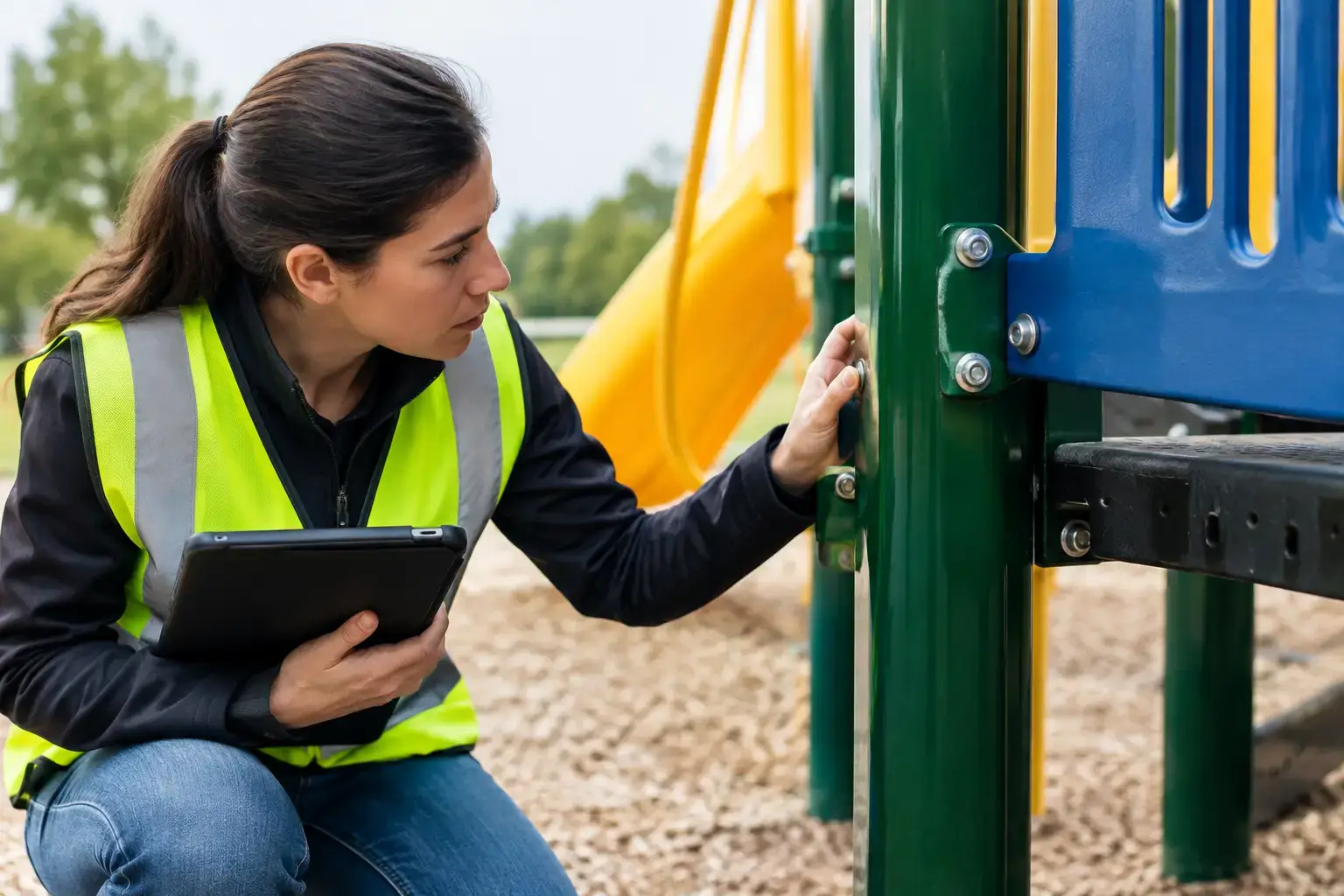
A loose swing bolt can turn a favorite after-school activity into a sudden stop. In North Texas, intense sun, spring storms, shifting soil, and year-round use can all take a toll on a backyard playset. Knowing how to inspect playground hardware gives parents a practical way to catch small issues before children climb, swing, and slide.
A good inspection is not about making a wooden playset look brand-new every week. It is about checking the parts that carry weight, control movement, or could create a pinch, cut, or fall hazard. A quick walk-around each week and a more thorough seasonal check will keep the job manageable.
Start With a Safe, Hands-On Routine
Inspect the playset when children are not using it, preferably in daylight after the wood and hardware are dry. Keep a wrench or socket set, screwdriver, work gloves, flashlight, and a rag nearby. If your set came with an owner's manual, use its recommended hardware sizes and inspection intervals as your first reference.
Begin at ground level and work upward. Look first, then touch and gently test components. You are listening for rattles, watching for movement where there should be none, and checking whether a connection still feels solid under normal hand pressure. Do not let a child “test” a questionable swing, ladder, or platform. Take it out of use until you know the issue is resolved.
For a busy family, the simplest schedule is a brief visual check before a weekend of play, then a detailed inspection at the start of spring, mid-summer, and fall. Equipment that sees daily use, especially swings and climbing features, deserves more frequent attention.
How to Inspect Playground Hardware at Every Connection
Hardware includes more than the bolts visible on the outside of the structure. Check carriage bolts, lag screws, washers, nuts, brackets, swing hangers, chain connectors, anchors, climbing grips, slide fasteners, and protective caps. Each part plays a different role, so the inspection should go beyond a quick glance.
Check bolts, screws, nuts, and washers
Look along beams, deck supports, ladders, rock walls, monkey bars, and accessory mounts. Bolts should sit flush against the wood or bracket with washers in place. A nut that has backed off even slightly can allow repeated movement, which widens the hole in the wood and puts more strain on the entire connection.
Tighten loose hardware to the manufacturer's guidance, but do not overtighten it. Cranking a bolt too hard can crush wood fibers, strip threads, or crack a plastic component. If a fastener spins freely, will not hold, is bent, or has stripped threads, replacing it is usually the better choice.
Pay close attention to protruding bolt ends. Protective caps should be intact and firmly fitted. Exposed threads, sharp screw points, and cracked caps can snag clothing or scratch skin. Replace missing caps and use only hardware designed for outdoor playground equipment.
Test swing hangers, chains, and connectors
Swing stations experience constant motion and carry dynamic loads, making them one of the highest-priority areas. Check that swing hangers are secure against the beam and that their bushings, bearings, or moving points operate smoothly without grinding, sticking, or excessive side-to-side play.
Run a gloved hand down each chain. Look for rust, stretched links, cracks, sharp edges, and worn protective coating. Inspect S-hooks, quick links, and other connectors to make sure they are fully closed and not rubbing against a chain link in a way that causes wear. A connector opening can catch fingers, clothing, or a swing chain.
Also inspect the seat attachment points. Flexible belt swings can crack around the bolt holes, while molded seats may split after years of heat exposure. If the seat, chain, or connector is visibly damaged, remove that swing from service instead of trying to make it last one more season.
Look at brackets, handles, and climbing attachments
Metal brackets at platform corners and beam connections should not be cracked, bent, or separating from the wood. Surface rust may be manageable when caught early, but deep corrosion, flaking metal, or a bracket with a visible crack calls for replacement. Rust is not just cosmetic when it affects the strength of the part.
Grab handles, climbing rocks, rope mounts, and steering wheels need a firm pull test. Confirm that climbing holds do not rotate and that ropes are not frayed where they meet their hardware. These attachments may feel minor, but children often use them while shifting their full body weight.
Inspect What the Hardware Is Attached To
A bolt can be tight and still be unsafe if the wood around it has deteriorated. Examine the areas surrounding every major connection for cracks, splitting, soft spots, rot, insect damage, or enlarged holes. On a premium wooden playset, some weathering is normal. Deep checking around a load-bearing bolt or a split beam is different and needs prompt attention.
Dallas-Fort Worth weather can be especially tough on exposed surfaces. Heat can dry and shrink wood, while rain can swell it. That seasonal cycle may loosen hardware over time. If you see repeated loosening at one connection, do not simply retighten it again and again. The wood may need repair, a proper reinforcement, or a replacement part.
Check the base of each support post as well. Soil movement, moisture, and ground cover can conceal damage near the ground. The playset should remain level, with no post lifting, leaning, or rocking. Hardware cannot compensate for an unstable structure or uneven installation site.
Do Not Skip Slides, Platforms, and Pinch Points
A slide may look fine from a distance while its mounting screws have loosened underneath the deck. Inspect all slide entry and exit connections, checking for cracks in plastic, sharp edges, gaps, and loose fasteners. Make sure the slide has not shifted away from the platform.
On elevated playsets, walk carefully across each platform and look below the deck for loose joist hardware, missing fasteners, or sagging supports. Railings and safety panels should be secure, with no gaps created by warped wood or loose brackets. Gates, if included, should latch consistently.
As you inspect moving features, think like a child. Watch for spaces where fingers can get caught between chain links, swing hangers, moving ropes, or hinged accessories. Check that metal parts do not rub directly against wood or plastic in a way that creates grooves, heat, or gradual wear.
Know When Tightening Is Not Enough
Some fixes are appropriate for a confident homeowner: tightening an approved fastener, replacing a missing bolt cap, or cleaning debris from a connection. Other issues deserve professional help. Stop using the affected feature if you find a cracked hanger, heavily corroded chain, split support beam, loose anchor, unstable platform, or a part you cannot identify with confidence.
Replacement hardware is not one-size-fits-all. The right diameter, length, coating, washer, and load rating matter. Swapping in a random screw or household hook can create a bigger problem, even if it seems to fit. Use manufacturer-approved replacement parts whenever possible.
For families who would rather spend Saturday enjoying the backyard than tracking hardware specifications, a professional tune-up can be a smart ownership step. Dallas Playsets can help local families evaluate wear, address maintenance needs, and keep a premium playset ready for the next big backyard adventure.
Finish With the Ground and Play Zone
Hardware inspections work best alongside a quick check of the area below and around the playset. Rake loose-fill surfacing back into thin spots, clear toys and branches from swing paths, and look for exposed roots or border edges that could cause trips. A well-maintained play zone gives children a more forgiving landing area if a fall happens.
After you finish, make a simple note of what you tightened, replaced, or want to monitor. That record makes seasonal maintenance easier and helps you spot a part that is wearing faster than it should. A few focused minutes of care can keep the backyard open for the kind of climbing, swinging, and make-believe childhood remembers.