
Blog · November 27, 2026
When to Replace Swing Chains: Safety Checklist
A swing set can look solid from across the yard while its most hard-working parts are quietly wearing down. Every takeoff, twist, jump, and big-kid swing puts force on the…
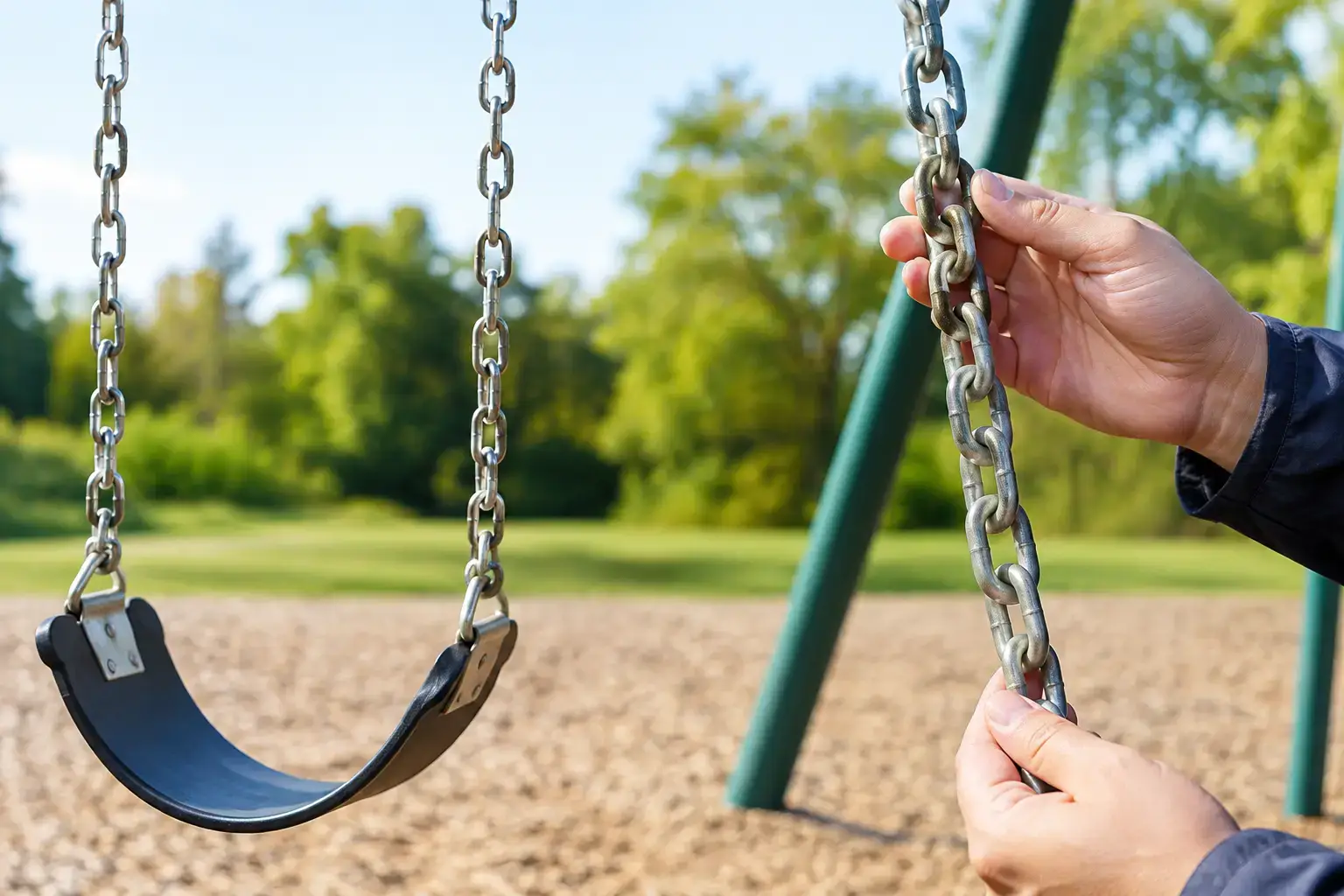
A swing set can look solid from across the yard while its most hard-working parts are quietly wearing down. Every takeoff, twist, jump, and big-kid swing puts force on the chain, connectors, and hangers overhead. Knowing when to replace swing chains helps keep backyard play adventurous, not uncertain - especially after years of Texas sun, rain, and nonstop family fun.
For most families, a quick visual check is enough to catch concerns before they become a bigger repair. The goal is not to replace parts on a schedule just because time has passed. It is to replace them when wear, corrosion, damage, or changing use tells you the chain can no longer perform as intended.
When to Replace Swing Chains
Replace swing chains immediately if you find cracking, broken links, deep rust, sharp edges, stretched or misshapen links, or visible damage around welds and connection points. A chain that has lost its original shape or smooth finish should not stay in service while you wait to see if the issue gets worse.
Surface discoloration is not always an emergency. Galvanized chains can develop light oxidation over time, particularly in humid weather or after repeated exposure to sprinklers. But rust that flakes off, creates rough patches, leaves pitted metal, or concentrates around a link's weld is a different story. Those signs can mean the metal itself is weakening.
Pay close attention to the links closest to the swing hanger and swing seat. Those points experience the most movement and friction. A chain may appear fine along its length while the top few links or bottom connectors show the first meaningful wear.
For a premium wooden playset, a well-maintained chain can last for years. Exact timing depends on the chain material, the amount of use, weather exposure, whether children wear the chain-in-place coating, and how consistently the set is inspected. A heavily used swing in a busy DFW backyard may need attention sooner than one used occasionally.
Signs Your Swing Chain Needs Attention
A chain does not have to break to be past its best. Look for changes that suggest it is time to stop using that swing until it can be evaluated or repaired.
If links are elongated, flattened, bent, or no longer sit evenly against each other, replace the chain. These changes often happen after excessive force, impact damage, or long-term wear. Do not try to bend a damaged link back into shape. It may look better, but its strength is no longer something you can trust.
Check for coating damage, too. Many residential swing chains have a protective finish or a pinch-free coating designed to make swinging more comfortable for small hands. When that covering splits, peels, becomes sticky, or slides out of place, it may expose sharp metal or create a pinch point. The metal beneath still needs inspection, but a damaged coating alone can be a good reason to replace the chain.
Listen during play. Squeaking can be normal when hardware needs lubrication, but grinding, popping, or an unusually loud metallic sound deserves a closer look. Noise may come from the chain, but it can also point to worn swing hangers, bushings, carabiners, S-hooks, or bolts. The chain is only one part of the swing system.
Do Not Forget the Hardware Above and Below
Swing chain replacement should never be treated as an isolated task. The parts that hold the chain in place carry the same repeated load and may wear at a similar pace.
Inspect swing hangers for cracks, loose bolts, uneven movement, worn bushings, and metal-on-metal friction. Check quick links, carabiners, S-hooks, and connecting hardware for gaps, distortion, rust, or sharp edges. If an S-hook has begun to open, do not simply squeeze it closed and send kids back out to play. Replacement with properly rated hardware is the safer option.
At the seat, make sure each attachment is secure and sits evenly. A lopsided swing can put uneven strain on one side of the chain and make wear progress faster. Rubber belt swings, toddler bucket seats, gliders, and specialty accessories all have different connection needs. Replacement parts should match the intended swing type, mounting hardware, and load requirements.
This is one reason professional maintenance can be a smart choice for busy families. A trained technician can inspect the complete assembly rather than focusing only on the obvious rust spot or loose connector.
How Often Should You Inspect Swing Chains?
During active outdoor-play months, give the swing area a brief check every month. It only takes a few minutes to run your hand carefully along the chain, look at the connection points, and watch the swing move. If you feel anything rough, see rust, or notice unusual motion, pause use until you have a clear answer.
Plan a more thorough inspection at least twice a year - ideally before the busiest spring and summer play season, then again after months of heat, storms, and heavy use. In North Texas, intense sun can accelerate wear on coated chains and plastic accessories, while sudden rain and irrigation can keep metal hardware damp longer than expected.
Inspect sooner after a major storm, a fallen branch, moving the playset, a hard impact, or a period when the swing has been used by older or larger children. Even a premium playset needs adjustments as the family using it grows.
Should You Replace One Chain or Both?
It depends on the condition of each side. If one chain was damaged by a specific event while the other is newer and clearly in excellent shape, replacing the affected side may be appropriate when the replacement is an exact match in length, style, material, and rating.
In many cases, replacing both chains is the better long-term choice. Two chains installed at the same time will generally wear more evenly and help maintain a level seat. This is especially practical when both chains are the same age and have seen the same sun, weather, and daily use.
Avoid mixing mismatched chain lengths, coatings, or link sizes. A swing that hangs unevenly can feel awkward, create unnecessary strain, and make it harder to spot a developing issue later.
Replacement Is a Good Time for a Full Tune-Up
When swing chains are ready for replacement, use the opportunity to check the broader condition of the playset. Inspect the beam, brackets, hardware, swing hangers, seats, slides, climbing components, and surrounding ground cover. On wooden sets, look for splinters, cracks, loose fasteners, and areas where the finish may need care.
Ground protection matters as much as overhead hardware. A swing needs an appropriate clear-use area and sufficient protective surfacing beneath it. Mulch, engineered wood fiber, rubber material, or another suitable ground cover should be maintained at the right depth and raked back into place after active play. A worn chain is a reason to inspect, but a safe play space is built from the whole system working together.
If your playset has been relocated, inherited with the home, or used for years without a professional inspection, a maintenance visit can take the guesswork out of the process. Dallas Playset Company can help families keep premium backyard equipment ready for the next round of climbing, swinging, and big outdoor memories.
A swing should feel simple when your child climbs aboard: secure chains, a level seat, open space, and the freedom to fly. A few thoughtful inspections each year help keep it that way.