
Blog · November 25, 2026
How to Paint Wooden Playsets for Texas Weather
A wooden playset can take a beating in North Texas. Summer sun, sudden rain, pollen, muddy shoes, and hundreds of trips up the ladder all leave their mark. If you want to paint…
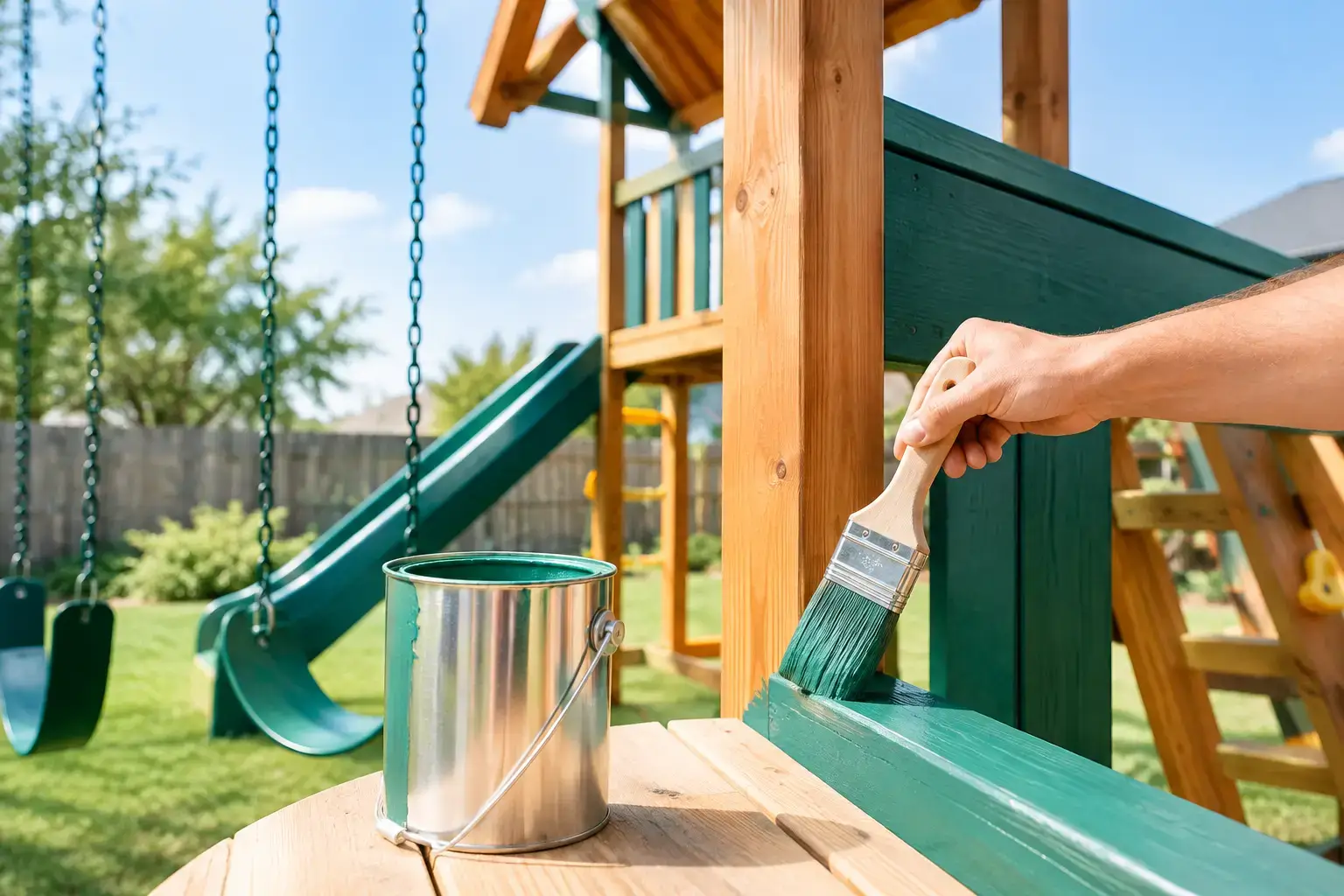
A wooden playset can take a beating in North Texas. Summer sun, sudden rain, pollen, muddy shoes, and hundreds of trips up the ladder all leave their mark. If you want to paint wooden playsets in your backyard, the goal is not simply a brighter color. It is to protect the wood while keeping every climbing, swinging, and sliding surface safe for the kids who use it.
A fresh finish can give an established playset a second life, especially when the structure is still solid but the stain has faded or the wood looks dry. The right preparation and products matter more than the color you choose. A rushed paint job can peel quickly, trap moisture, create slick surfaces, or interfere with hardware and moving parts.
Start by deciding whether paint is the right finish
Not every wooden playset needs paint. Many premium cedar playsets arrive with a factory stain or sealant designed to let the natural wood grain show through. When that finish fades, a compatible semi-transparent stain may be the better choice. It penetrates the wood instead of forming a surface film, which can make future maintenance easier in the Texas heat.
Paint is a smart option when you want a more dramatic backyard update, need to cover uneven discoloration, or are refreshing an older structure that has already been painted. It creates a more uniform look and can complement your home, fence, or landscaping. The trade-off is that painted surfaces require more careful prep and occasional touch-ups, particularly on railings, ladders, and deck edges that see frequent contact.
Before changing the finish, check the playset manufacturer’s care instructions and warranty terms. Some factory finishes have specific recommendations, and applying an incompatible coating could affect warranty coverage. If you are unsure what is already on the wood, test a small, hidden area before committing to the entire project.
Inspect the playset before you paint
Paint should never hide a maintenance issue. Start with a close inspection of the complete structure, including the fort, ladder, climbing wall, swing beam, deck boards, railings, and ground-contact areas. Look for cracks, splinters, soft spots, loose knots, rot, and boards that are beginning to warp.
Check bolts, brackets, swing hangers, chains, ropes, and anchors as well. Tighten hardware where appropriate, but do not paint over bolts, moving joints, swing hangers, or chain links. A painted fastener can make future service harder, and paint buildup may affect how moving components work.
If you find significant wood damage, unstable framing, or a loose swing beam, handle repairs before cosmetic work begins. This is also a good time to look at the protective surfacing below the playset. Fresh paint looks great, but a safe landing zone is what gives parents real peace of mind.
For families who prefer a professional set of eyes, a maintenance tune-up can help identify the items that deserve attention before refinishing begins. Dallas Playset Company supports DFW families with ongoing playset care, so your backyard adventure can stay ready for play season after season.
Choose paint made for exterior wood
For most residential wooden playsets, use a high-quality exterior paint rated for wood and changing weather conditions. Acrylic latex exterior paint is often a practical choice because it is durable, flexible, and easier to clean up than oil-based products. Look for a product labeled low-VOC or zero-VOC when possible, and allow plenty of cure time before children return to the playset.
Choose colors with comfort in mind. Dark navy, black, deep red, and charcoal can look sharp, but they absorb more heat under direct Texas sun. On a hot afternoon, dark-painted handrails and decks can become uncomfortable for little hands and bare feet. Lighter shades such as soft gray, sage, light blue, tan, or warm white generally stay cooler and make it easier to spot dirt, cracks, or insect activity.
Do not paint plastic slides, vinyl components, swing seats, climbing rocks, ropes, or metal hardware unless the component manufacturer specifically approves it. Paint on plastic can crack or become slippery, while paint on ropes can make the fibers stiff and difficult to inspect. If the slide has faded, replacement is usually the safer choice.
How to prepare wooden playsets for paint
The best paint jobs are built on clean, dry, stable wood. Pick a stretch of mild, dry weather and plan for the project to take more than one day. Painting in direct, intense sun can cause paint to dry too fast, while painting before rain can ruin a finish before it cures.
Begin by removing loose accessories that can be safely detached, such as flags, steering wheels, telescopes, and removable swing seats. Cover slides and nearby ground material with drop cloths. Keep fasteners and hardware organized so reassembly is simple.
Wash the wood with a cleaner suitable for exterior wood, using a soft brush to remove dirt, pollen, mildew, and old residue. Avoid blasting the structure with a pressure washer. High pressure can gouge cedar, force water deep into the grain, and raise fibers that later become splinters. Rinse thoroughly and let the wood dry completely, often 24 to 48 hours depending on weather and shade.
Next, scrape any peeling paint and sand rough areas until they feel smooth. Focus on handrails, ladder rungs, deck edges, and spots where children grip the wood. Use medium-grit sandpaper for failing finish and finer sandpaper to soften roughness. Wipe away all sanding dust before priming.
Bare patches, repaired areas, and previously painted surfaces may need exterior wood primer. Primer helps improve adhesion and gives the final color a more even appearance. If you are covering a dark or heavily stained surface with a lighter color, primer is especially worthwhile.
Apply paint without creating a safety problem
Use a quality brush for corners, joints, railings, and detailed areas, then use a small roller on broad flat boards. Thin, even coats perform better than one heavy coat. Heavy paint can drip into joints, seal moisture into tight areas, and create a gummy surface that takes much longer to cure.
Work from the top down, beginning with the fort and roof supports before moving to rails, walls, and lower framing. Keep paint out of bolt holes, hardware connections, and moving parts. On decks and ladder steps, follow the paint manufacturer’s directions closely. Some paints are not intended for horizontal walking surfaces, and a glossy finish can be slick when wet.
Most playsets need two finish coats for consistent coverage and long-term protection. Allow the recommended drying time between coats, even if the first coat feels dry to the touch. Dry and cured are not the same thing. Paint may feel dry within hours but still need several days to harden enough for energetic backyard play.
Keep children, pets, and outdoor toys away until the finish has fully cured. This prevents fingerprints and scuffs, but more importantly, it avoids exposure to uncured coatings and reduces the chance of a child slipping on a freshly painted surface.
Maintain the finish through Dallas-Fort Worth seasons
A painted playset is not a one-and-done project. Check it every spring and again before the busiest fall play months. Touch up small chips promptly, especially on exposed end grain, deck edges, and railings. Small repairs are far easier than stripping a large section after water gets beneath the paint.
Keep leaves, mulch, and sprinkler overspray from sitting against the wood. Trim back shrubs that trap moisture around the structure, and wash off heavy pollen or bird droppings with mild soap and water. During a routine inspection, watch for peeling paint, splinters, loose hardware, cracked plastic, and worn swing components.
A well-painted playset should still look like a place made for adventure, not a museum piece. Choose a finish that fits your family’s style, protect the surfaces children touch most, and give the paint time to cure. Then step back, watch the first climb to the fort, and enjoy a backyard that is ready for many more big play days.